

Occipital Neuralgia Treatment
Stabbing pain at the back of the head, evaluated and treated at five clinics across North Georgia & East Tennessee.
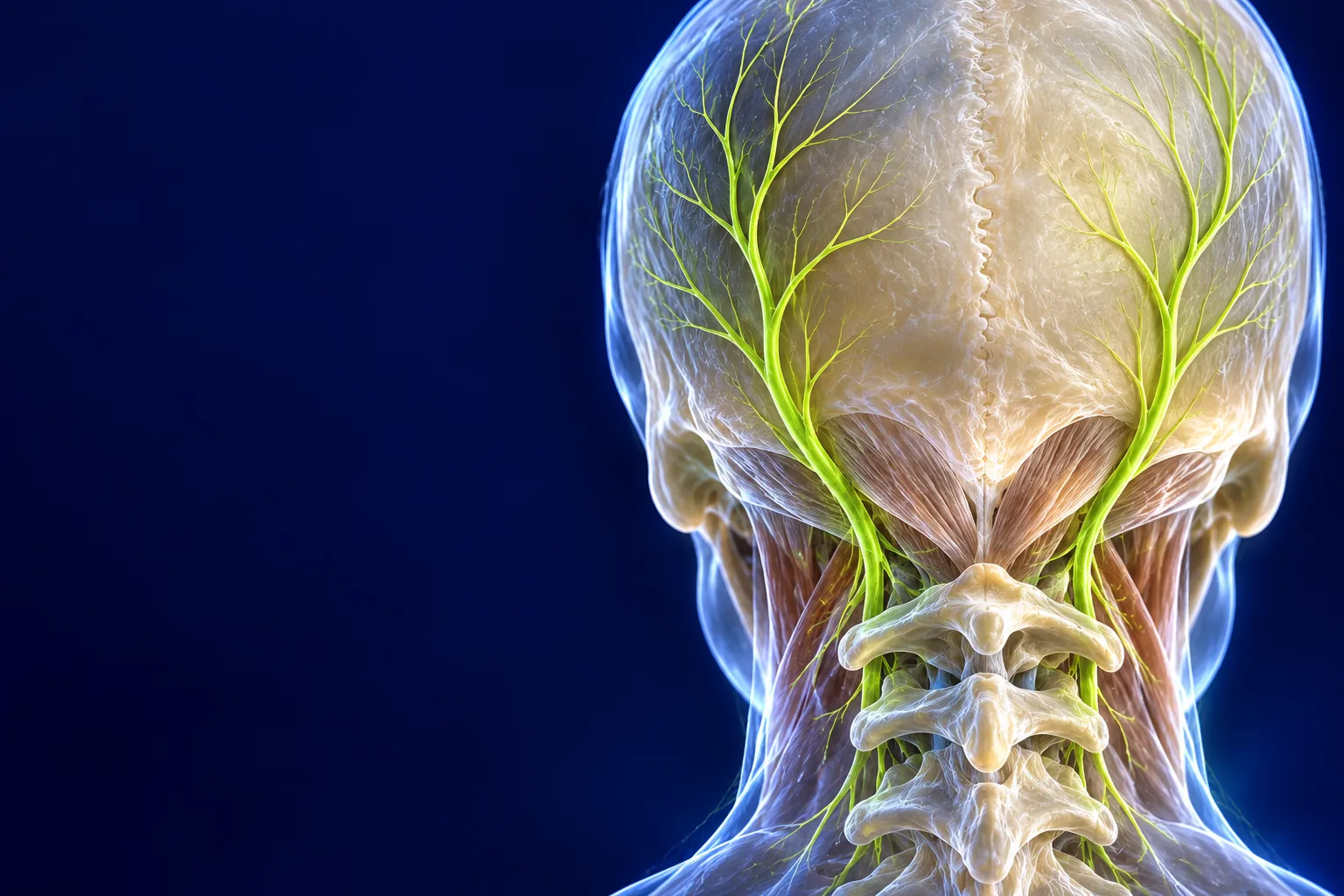
Conceptual illustration
Medically reviewed by Joshua L. Hare, DO, Founder & Medical Director
Headache pain that starts at the base of the skull
Occipital neuralgia is pain in the back of the head along the territory of the occipital nerves,[1] which climb from the top of the neck up the scalp. It typically arrives as stabbing or electric attacks lasting seconds to minutes,[1] usually starting at the base of the skull and shooting upward, often with a scalp tender enough that brushing your hair is uncomfortable. It almost always results from compression or irritation[1] of one of these nerves. At IPC, the occipital nerve block is both the confirming test and the first interventional treatment — relief while the anesthetic works establishes the diagnosis[1] — and peripheral nerve stimulation is an option for pain that keeps returning.
Talk with our team
Request a callback
The team calls you back within one business day, Monday to Thursday.
Insurance we acceptSymptoms of occipital neuralgia
The attacks have a recognizable signature:
- Sudden stabbing, shooting or electric pain that starts at the base of the skull and travels up the back of the head, on one or both sides
- Attacks lasting seconds to minutes, sometimes arriving several in a row
- Tenderness of the scalp, often noticed when you rest that side of your head on a pillow
- Tingling, numbness or heightened sensitivity over the same area between attacks
- Pain set off by pressing at the spot where the nerve emerges at the base of the skull
A steady, constant ache that never spikes points away from occipital neuralgia — the attack pattern is part of the diagnosis, which is why a careful history counts for more here than any scan.
When to see a pain specialist about occipital neuralgia
Recurring attacks of stabbing pain at the back of the head justify an appointment once over-the-counter medication has stopped holding them. Because the diagnosis rests on a numbing injection rather than imaging, a pain specialist can usually confirm or exclude it at the first visit.
A sudden, severe headache unlike any you have had before, or a headache with fever, a stiff neck, confusion, weakness or vision changes, needs emergency care rather than a clinic appointment.
Treatment options for occipital neuralgia
Treatment is sequenced by how the pain responds. Medications used for nerve pain — anticonvulsants and certain antidepressants among them[1] — may quiet the attacks. The occipital nerve block settles the diagnosis and treats it in the same visit, and an injection with steroid can occasionally hold for several months.[1] For pain that responds to blocks but keeps coming back, nerve stimulator leads placed across the base of the skull[1] are the longer-term option.
Occipital Nerve Block
An occipital nerve block involves injecting local anesthetic and sometimes corticosteroid around the greater and...
Peripheral Nerve Stimulation
Peripheral nerve stimulation (PNS) involves placing small electrodes near a specific peripheral nerve to deliver mild...
Five clinics
Occipital neuralgia treatment in North Georgia and East Tennessee
Pain management specialists accepting new patients at five clinics.