

Arthritis Treatment
Joint pain and stiffness from osteoarthritis or rheumatoid arthritis, evaluated and treated at five clinics across North Georgia & East Tennessee.
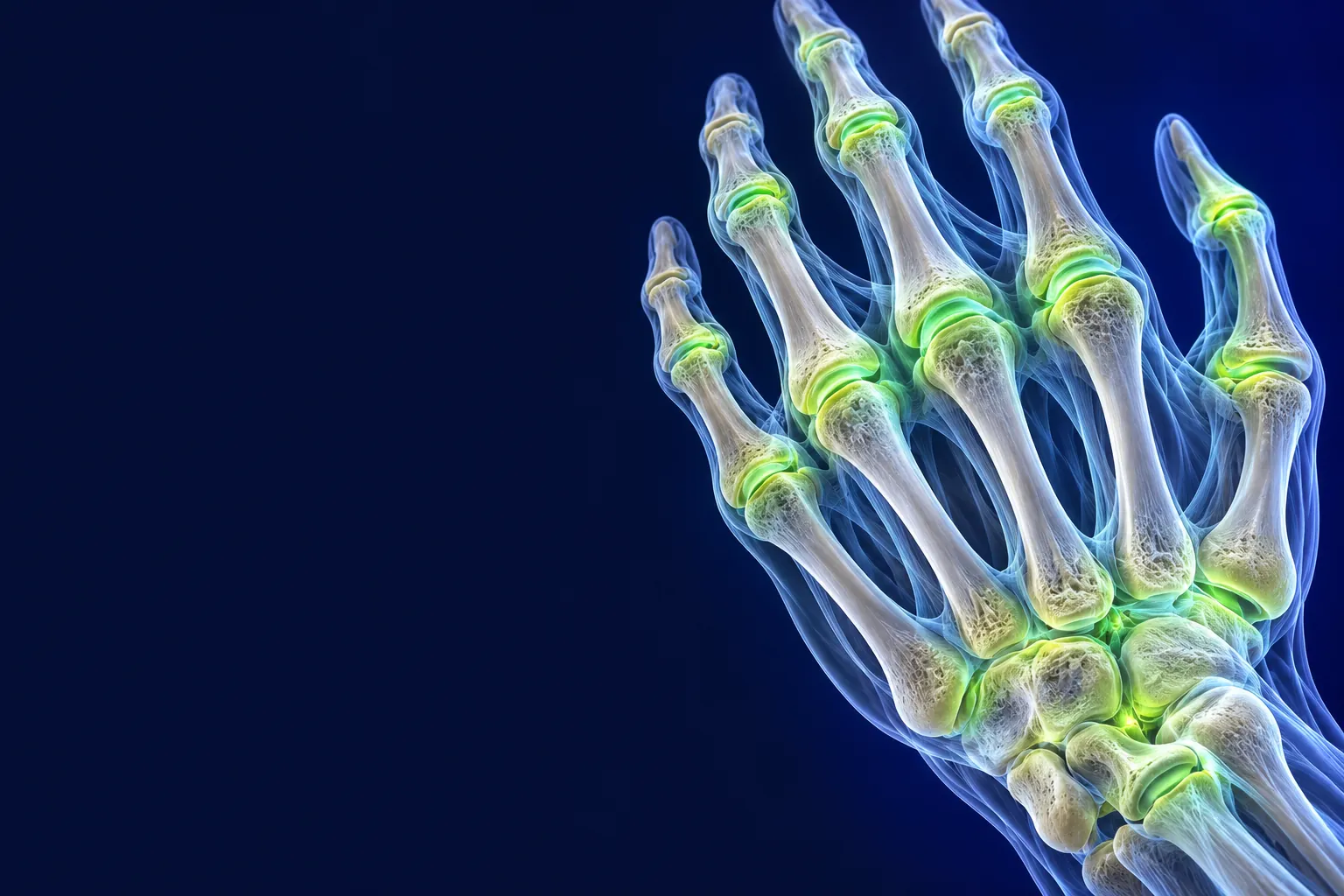
Conceptual illustration
Medically reviewed by Joshua L. Hare, DO, Founder & Medical Director
What arthritis does to a joint
Arthritis is a broad term for conditions that cause joint inflammation, pain, stiffness, and reduced range of motion. The two most common types — osteoarthritis (wear-and-tear degeneration)[1] and rheumatoid arthritis (autoimmune inflammation) — can affect any joint in the body, including the spine, hips, knees, shoulders, and hands. At IPC, we focus on managing the pain and functional limitations caused by arthritis using a range of interventional techniques. Our treatments include intra-articular joint injections with corticosteroids or hyaluronic acid (viscosupplementation), genicular nerve blocks and radiofrequency ablation for knee arthritis, facet joint injections for spinal arthritis, and regenerative medicine options like platelet-rich plasma (PRP) therapy.
Talk with our team
Request a callback
The team calls you back within one business day, Monday to Thursday.
Insurance we acceptSymptoms of arthritis
Arthritis pain usually builds over months or years rather than arriving suddenly. Most people notice it first in the joints they use most — knees, hips, hands, or the small joints of the spine.
- Joint pain that is worse during or after using the joint, and eases with rest
- Stiffness that is most noticeable in the morning or after sitting still; in osteoarthritis this typically loosens within about half an hour, while stiffness lasting an hour or more more often points to an inflammatory arthritis
- Swelling, warmth, or a joint that looks larger than its partner on the other side
- A grinding or crackling sensation when the joint moves
- Losing range of motion — a knee that will not fully straighten, a hip that makes putting on socks difficult
Pain that wakes you at night, or that has started limiting what you do rather than just making it uncomfortable, is a meaningful change and worth reporting.
When to see a pain specialist about arthritis
A pain specialist is the right next call when arthritis pain is no longer controlled by over-the-counter medication, weight management and activity changes — or when those options are not tolerable. You do not need to have exhausted every alternative first, and you do not need to be a surgical candidate.
Consider an evaluation if joint pain has limited your work, sleep or walking for more than a few weeks, if you are relying on anti-inflammatories most days, or if you have been told you are "too young" or "not ready" for joint replacement and are looking for what comes in between. Interventional options — image-guided joint injections, nerve blocks and radiofrequency procedures — are aimed at exactly that gap.
A hot, swollen, intensely painful joint with a fever needs same-day medical assessment, not a scheduled appointment. A joint infection is uncommon but is treated urgently.
Treating arthritis pain without surgery
Arthritis treatment usually starts with what you can do at home. Medicine comes next, then injections and nerve treatments if the pain is still not controlled. For osteoarthritis (OA), the most common type, the steps usually look like this:
- Staying active. Exercise can reduce joint pain and stiffness and increase flexibility, muscle strength, and endurance[2]. Easy-on-the-joints options include walking, cycling, swimming, tai chi, water aerobics, or a low-impact aerobics class[2].
- Weight. If you carry extra weight, losing weight can help to reduce pain, prevent more injury, and increase mobility in the joints[2], most of all in the knees and hips.
- Medicine. Pain relievers and arthritis creams are sold without a prescription, and MedlinePlus advises that it's best to talk to your provider about using them[1]. The 2019 guideline from the American College of Rheumatology and the Arthritis Foundation makes strong recommendations for topical nonsteroidal antiinflammatory drugs (NSAIDs) for knee OA, oral NSAIDs[3]: anti-inflammatory creams or gels for the knee, and anti-inflammatory pills.
- Joint injections. If home care does not help enough, your provider may prescribe injections (shots) into the joint or prescription pain relievers[1]. The same guideline strongly recommends intraarticular glucocorticoid injections for knee OA[3]: a steroid injected into the knee joint. Hyaluronic acid injections, also called viscosupplementation, are sometimes recommended for knee osteoarthritis[2].
- Nerve treatment for the knee. The guideline also lists radiofrequency ablation for knee OA[3] among its recommendations. It uses heat to disrupt the nerves that carry pain signals from the knee. Our genicular nerve radiofrequency ablation page explains how it works and how a genicular nerve block fits in.
Surgery comes after all of these. MedlinePlus says: If none of these treatments help enough, surgery may be an option[1].
IPC provides the injection and nerve treatments on that list: joint injections, viscosupplementation, genicular nerve blocks and radiofrequency ablation for the knee, and facet joint procedures for arthritis in the spine. To ask about any of these, request a callback or call your nearest clinic.
Treatment options for arthritis
The options below run from joint injections and viscosupplementation through to nerve blocks and radiofrequency ablation. Which one fits depends on which joint is involved, what your imaging shows, and what you have already tried.
Genicular Nerve Block
A genicular nerve block targets the genicular nerves — sensory nerves that transmit pain signals from the knee joint....
Genicular Nerve Radiofrequency Ablation
Genicular nerve radiofrequency ablation (RFA) uses thermal energy to disrupt the genicular nerves that transmit...
Radiofrequency Ablation
Radiofrequency ablation (RFA) — also called radiofrequency denervation, neurotomy or lesioning — uses controlled...
Joint Injection (Corticosteroid)
Corticosteroid joint injections deliver a powerful anti-inflammatory medication directly into a painful joint to reduce...
Viscosupplementation (Hyaluronic Acid)
Viscosupplementation involves injecting hyaluronic acid gel into the knee joint to supplement the natural synovial fluid...
Stem Cell Therapy
Stem cell therapy represents the cutting edge of regenerative medicine, using your body's own healing cells to repair...
Stem Cell Therapy for Knee Pain
Stem cell therapy for knee pain offers a powerful regenerative alternative for patients with knee osteoarthritis...
Stem Cell Therapy for Hip Pain
Stem cell therapy for hip pain offers patients with hip osteoarthritis, labral tears, and early avascular necrosis a...
Platelet-Rich Plasma (PRP) Therapy
Platelet-rich plasma (PRP) therapy uses a concentrated preparation of your own platelets to promote tissue healing...
Cervical Radiofrequency Ablation
Cervical radiofrequency ablation (RFA) uses heat from radio waves to interrupt the medial branch nerves that carry...
Lumbar Radiofrequency Ablation
Lumbar radiofrequency ablation (RFA) interrupts the medial branch nerves that carry pain from arthritic facet...
Thoracic Radiofrequency Ablation
Thoracic radiofrequency ablation (RFA) treats mid-back pain coming from arthritic facet joints in the thoracic...
Sacroiliac Joint Injection
A sacroiliac (SI) joint injection delivers anesthetic and corticosteroid directly into the SI joint — the large joint...
References
Clinical sources for this page.
- National Library of Medicine, MedlinePlus. Osteoarthritis. Back to first citation ↑
- National Institute of Arthritis and Musculoskeletal and Skin Diseases. Osteoarthritis: Diagnosis, Treatment, and Steps to Take. Back to first citation ↑
- Kolasinski SL, Neogi T, Hochberg MC, et al. 2019 American College of Rheumatology/Arthritis Foundation Guideline for the Management of Osteoarthritis of the Hand, Hip, and Knee. Arthritis & Rheumatology. 2020;72(2). Back to first citation ↑
Five clinics
Arthritis treatment in North Georgia and East Tennessee
Pain management specialists accepting new patients at five clinics.