

Spinal Stenosis Treatment
Diagnosis and image-guided treatment for lumbar and cervical stenosis at five clinics across North Georgia & East Tennessee.
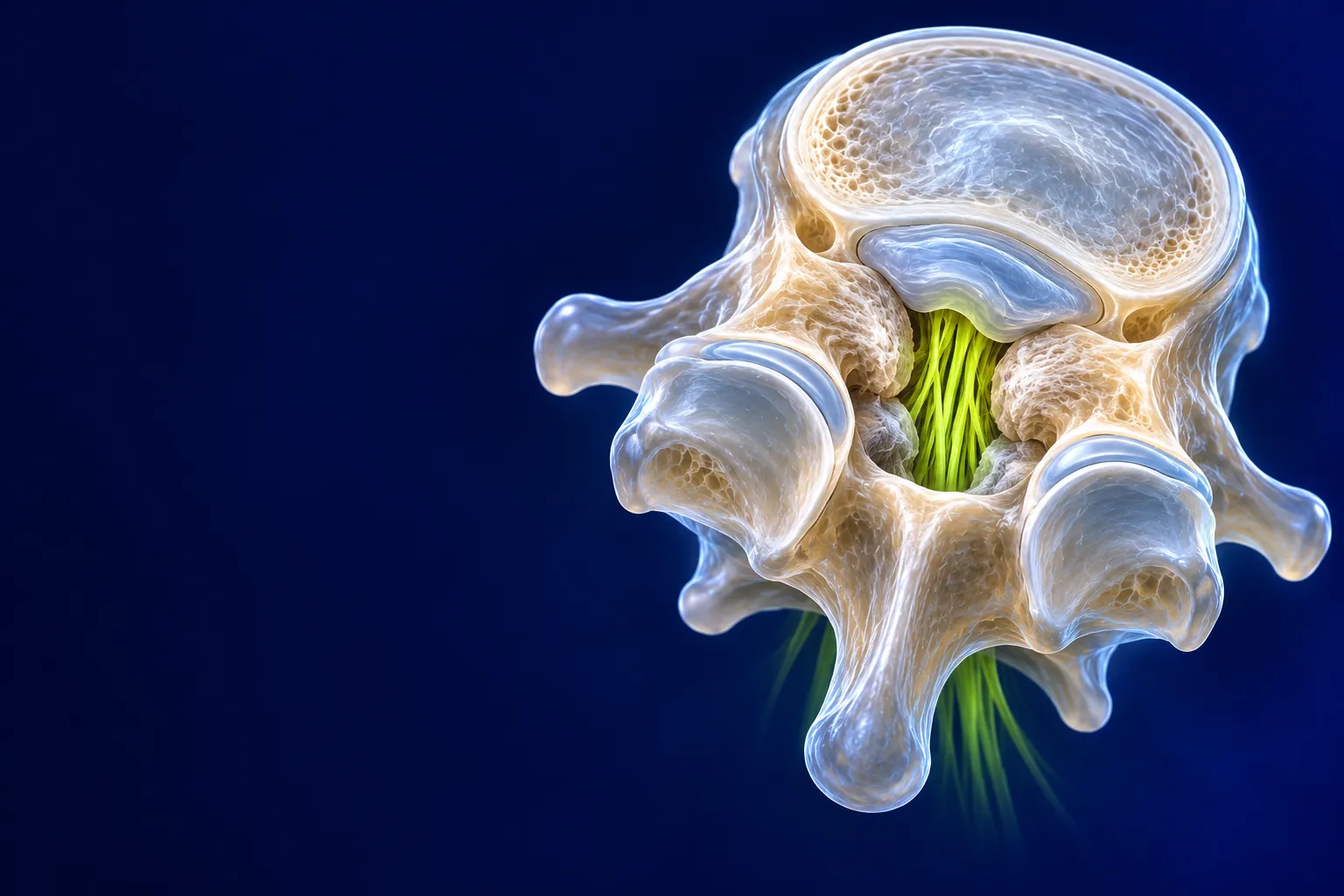
Conceptual illustration
Medically reviewed by Joshua L. Hare, DO, Founder & Medical Director
What spinal stenosis is
Spinal stenosis is a narrowing of the spinal canal or the openings where nerves exit, most often from arthritis, thickened ligaments, or bulging discs as the spine ages. Lumbar stenosis is the most common form:[1] its hallmark is leg pain, heaviness, or weakness when standing or walking that eases when you sit down or lean forward. Cervical stenosis, in the neck, can affect the arms and hands. At IPC, evaluation matches your symptoms to the levels shown on imaging. Treatment options include epidural steroid injections at the affected level and, for appropriate candidates with neurogenic claudication, minimally invasive options such as the MILD procedure or an interspinous spacer.
Talk with our team
Request a callback
The team calls you back within one business day, Monday to Thursday.
Insurance we acceptSymptoms of spinal stenosis
Symptoms depend on where the narrowing is; the lumbar spine is the most common site.
- Leg pain, heaviness, cramping or weakness that comes on with standing or walking and eases within minutes of sitting down or leaning forward — leaning on a shopping cart is the classic relief position
- A walking distance that has gradually shrunk over months or years
- Low back pain, often milder than the leg symptoms
- Numbness or tingling in the legs or feet
- With narrowing in the neck: aching in the arms, clumsiness in the hands, or changes in balance
Many people over 60 have some narrowing on a scan without symptoms, so what matters — and what an evaluation works out — is whether the narrowing seen on imaging actually explains the symptoms you have.
When to see a pain specialist about spinal stenosis
Arrange an evaluation if leg symptoms are limiting how far you can walk or how long you can stand, or if back and leg pain has stopped responding to activity changes and over-the-counter medication. Epidural steroid injections can reduce inflammation around the compressed nerves, and because they are delivered to a specific level under X-ray guidance, they also help confirm which levels are responsible. For lumbar stenosis with claudication symptoms, minimally invasive options exist between injections and open surgery; whether you are a candidate depends on your anatomy, and that is exactly what the evaluation establishes.
Weakness in the legs that is getting worse, new trouble with balance, or repeated falls need prompt assessment. New loss of bladder or bowel control, or numbness in the saddle area, needs same-day emergency assessment.
Treatment options for spinal stenosis
Injections are usually the first interventional step. The two device options below are specifically for lumbar stenosis with neurogenic claudication; whether you are a candidate is something your physician will help you judge.
Lumbar Epidural Steroid Injection
A lumbar interlaminar epidural steroid injection delivers corticosteroid medication into the epidural space of the...
Caudal Epidural Injection
A caudal epidural injection delivers steroid medication into the epidural space through the sacral hiatus (an...
Cervical Epidural Steroid Injection
A cervical epidural steroid injection delivers anti-inflammatory medication into the epidural space of the neck to...
Thoracic Epidural Steroid Injection
A thoracic epidural steroid injection delivers anti-inflammatory medication into the epidural space of the mid-back...
MILD Procedure
The MILD (Minimally Invasive Lumbar Decompression) procedure treats lumbar spinal stenosis by removing small...
INSPAN Interspinous Spacer
The INSPAN interspinous spacer is an implantable device placed between the spinous processes of the lumbar...
References
Clinical sources for this page.
Five clinics
Spinal stenosis treatment in North Georgia and East Tennessee
Pain management specialists accepting new patients at five clinics.