

Facet Joint Procedures
Thoracic Radiofrequency Ablation
Thoracic radiofrequency ablation (RFA) treats mid-back pain coming from arthritic facet joints in the thoracic spine, by interrupting the medial branch nerves that carry the pain signal once diagnostic blocks have identified them.
Conceptual illustration
Medically reviewed by Joshua L. Hare, DO, Founder & Medical Director
Updated September 2026
Conditions Treated
Thoracic facet arthropathy, mid-back pain following a compression fracture or trauma, and thoracic spondylosis, each confirmed first by diagnostic medial branch blocks.
Talk with our team
Request a callback
The team calls you back within one business day, Monday to Thursday.
Insurance we acceptThe treatment explained
How It Works
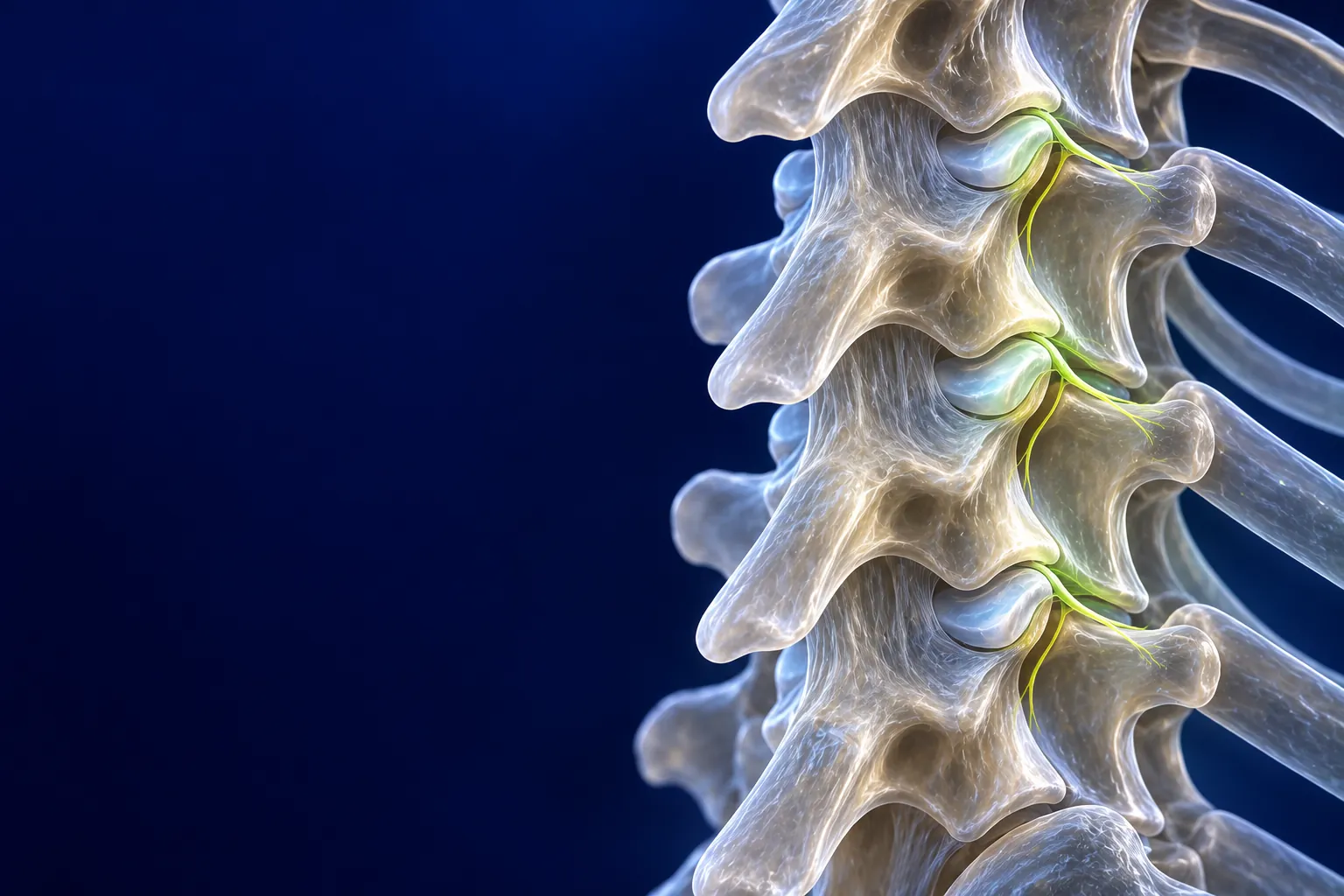
The course of the thoracic medial branch varies more between individuals than it does at the neck or the low back, which is why the diagnostic blocks that precede ablation carry particular weight at this level. Once the painful level is established, a radiofrequency cannula is positioned along the thoracic medial branches[1] under fluoroscopic guidance and controlled heat interrupts them.
Treatment day
What to Expect
A 30-45 minute outpatient procedure, depending on how many levels are treated and whether one or both sides are done. A driver is required.
Afterward
Recovery
Soreness across the mid-back for one to two weeks is normal as the treated nerves respond. Relief usually develops over two to four weeks. Most people return to normal activity within a few days.
Duration of Relief
Relief typically lasts 6 to 24 months.[1] The medial branch nerves regenerate over time, so the procedure can be repeated, typically once or twice a year.
Why the Mid-Back Is Treated Least Often
The thoracic spine is braced by the rib cage and moves far less than the neck or the low back, so its facet joints wear more slowly and produce pain less often. When they do, it is usually after something specific: a compression fracture, a fall, a motor vehicle collision, or years of sustained forward posture. Mid-back pain also has several other sources that must be excluded first, including the costovertebral joints where the ribs meet the spine, the discs, and referred pain from the abdomen or chest. Because of that, a thoracic ablation is normally reached only after imaging and diagnostic blocks have ruled the alternatives out.
References
Clinical sources for this page.
Five clinics
Book a visit
Our fellowship-trained physicians are accepting new patients at five clinics: Dalton, Ringgold, Cleveland, Farragut and Oak Ridge.