

Neuromodulation
Dorsal Root Ganglion (DRG) Stimulation
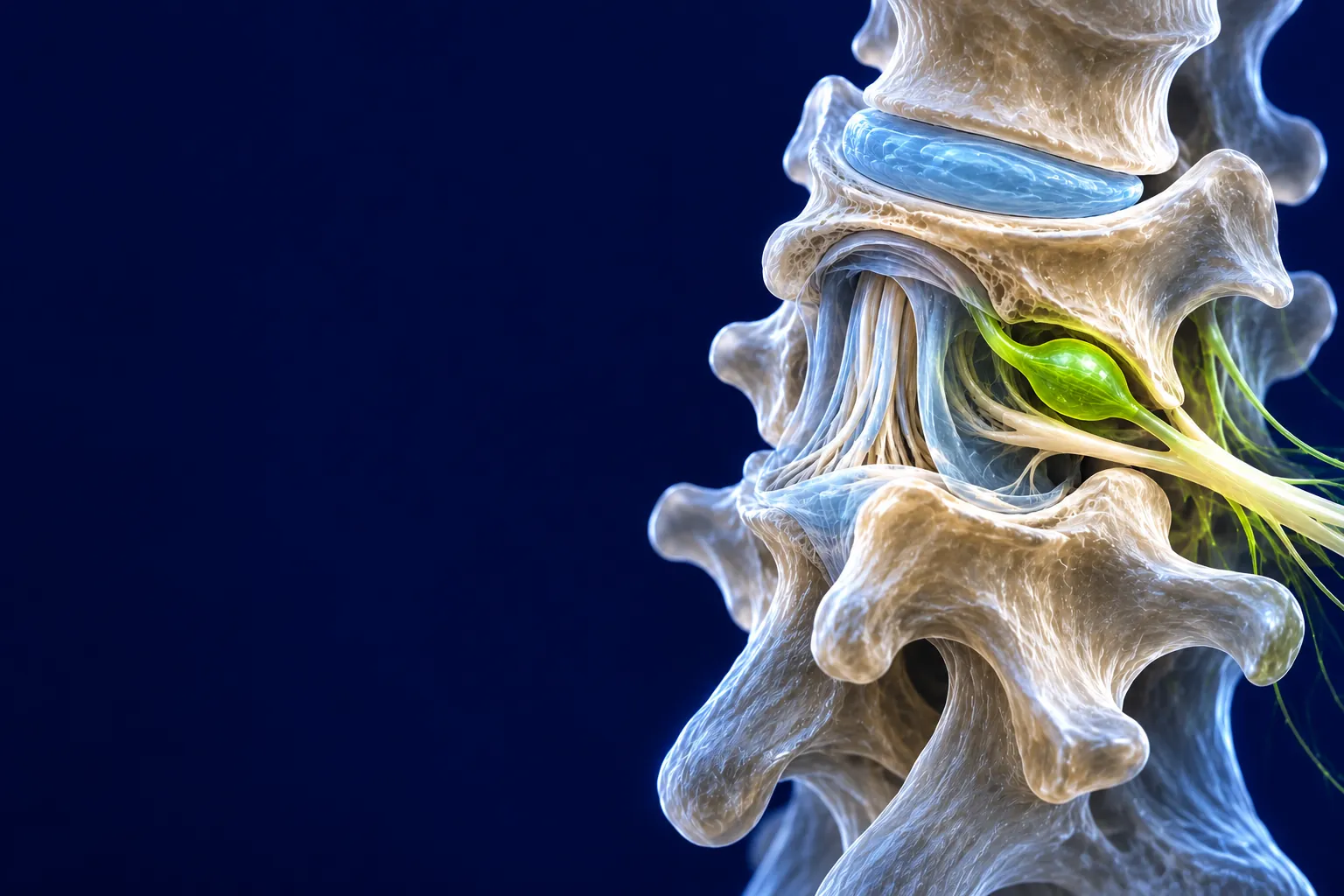
Dorsal root ganglion (DRG) stimulation is a specialized form of neuromodulation that targets the dorsal root ganglion — a cluster of sensory nerve cell bodies along the spinal column — to precisely modulate pain in specific, hard-to-treat areas of the body.
Conceptual illustration
Medically reviewed by Joshua L. Hare, DO, Founder & Medical Director
Updated August 2026
Conditions Treated
Complex regional pain syndrome (CRPS),[1] post-surgical nerve pain, groin and pelvic pain, foot and ankle pain, focal neuropathic pain
The key facts
Dorsal Root Ganglion Stimulation at a Glance
| What it is | Neurostimulation aimed at the dorsal root ganglion — the sensory relay serving one specific spinal level — instead of the spinal cord itself |
|---|---|
| Built for | Focal pain in a well-defined territory: complex regional pain syndrome or causalgia in the lower extremities,[1] groin, foot, or knee |
| Path to an implant | Two stages — a temporary trial first; the permanent implant follows only if the trial succeeds |
| Where it is done | The trial is placed in a sterile procedure suite; the permanent implant is done at our ambulatory surgery center |
| Coverage behavior | Less postural variation in paresthesia[1] — the sensation stays steadier when you sit, stand, or lie down |
| Precision | Reduced extraneous stimulation in nonpainful areas[1] compared with traditional SCS |
| Recovery | Activity restrictions for 6-8 weeks after the permanent implant; full activity by 8-12 weeks |
Talk with our team
Request a callback
The team calls you back within one business day, Monday to Thursday.
Insurance we acceptHow DRG Stimulation Targets One Specific Area
Every sensory signal from a given patch of your body — the top of one foot, the inside of one knee, one side of the groin — passes through a small cluster of nerve cells beside the spine called the dorsal root ganglion. It is the junction box for that territory and nothing else. Placing a fine electrode lead beside the DRG at the level that serves your painful area means the stimulation lands exactly where your pain lives, rather than being spread across the broader signal traffic of the spinal cord. That anatomy is what makes the therapy precise, and it is why a dedicated DRG device exists. Animal and human studies indicate that electrical stimulation of DRG neurons can modulate neuropathic pain signals.[1]
Clinical evidence
The ACCURATE Trial: the Evidence This Therapy Stands On
DRG stimulation was tested head-to-head against traditional spinal cord stimulation in ACCURATE, a pivotal, prospective, multicenter randomized trial in 152 subjects with complex regional pain syndrome or causalgia in the lower extremities[1] — the largest prospective, randomized comparative effectiveness trial to date[1] for these two therapies.
| Treatment success | 81.2% in the DRG arm versus 55.7% in the SCS arm at 3 months (P < 0.001),[1] with success defined as at least 50% pain relief without stimulation-related neurological deficits |
|---|---|
| Durability | Higher treatment success for DRG at both 3 and 12 months[1] |
| Safety | No subjects reported stimulation-related neurological deficits,[1] and device-related and serious adverse events were not different between the two groups[1] |
| Quality of life | Greater improvements in quality of life and psychological disposition[1] in the DRG arm |
| Steadiness | Less postural variation in paresthesia (P < 0.001) and reduced stimulation in nonpainful areas (P = 0.014)[1] |
Both arms of that trial are procedures we offer, and the comparison tells us which tool fits which patient: for focal lower-limb pain of this kind, the DRG’s precision is the better fit, while traditional spinal cord stimulation remains our tool of choice for broader, multi-area, or axial pain patterns. The consultation narrows that down, and the trial week settles it.
Trial First, Implant Second
- Your physician maps your pain to the one or two spinal levels whose dorsal root ganglia serve that territory.
- In a sterile procedure, temporary leads are placed beside those ganglia through a needle — no incision, no implanted battery yet.
- You live with the trial system for about a week, at home, doing ordinary things, and track your relief.
- If the trial delivers meaningful relief, the permanent system — leads and a small implanted battery — is placed at our ambulatory surgery center.
- Activity is restricted for 6-8 weeks while the leads settle in; most patients are back to full activity by 8-12 weeks.
- The device is then programmed to your pain, and reprogrammed over time as your needs change.
Safety
Risks and Side Effects
In ACCURATE's randomized comparison, no stimulation-related neurological deficits were reported,[1] and device-related and serious adverse event rates were no different from traditional SCS.[1] As with any implanted device, surgical risks exist — infection, bleeding, lead movement, or discomfort at the battery site — and your physician will walk through them with you before either stage. The trial week itself is reversible by design: the temporary leads are simply withdrawn if the therapy does not deliver.
Your questions
Common Questions
- How is this different from regular spinal cord stimulation?
- Traditional SCS places leads along the dorsal columns of the spinal cord, which carry signals from broad regions of the body. DRG stimulation moves the target one junction closer to your pain: the ganglion that serves only the painful territory. For focal pain, that translates into coverage that is harder to miss and less likely to spill into areas that never hurt.
- Will the feeling change when I sit down or roll over?
- Less than with traditional stimulation. In the randomized trial, DRG patients reported significantly less postural variation in the stimulation sensation.
- What if the trial does not help me?
- Then the leads come out, and you have spent a week getting a reliable answer without surgery. That is the point of trialing first: the permanent implant is only offered once your own trial week has shown meaningful relief.
- Where does the permanent implant happen?
- At our ambulatory surgery center, as an outpatient procedure. You go home the same day, with activity restrictions while the leads anchor in.
References
Five clinics
Book a visit
Our fellowship-trained physicians are accepting new patients at five clinics: Dalton, Ringgold, Cleveland, Farragut and Oak Ridge.