

Sacroiliac Joint Procedures
SACRIX SI Joint Stabilization
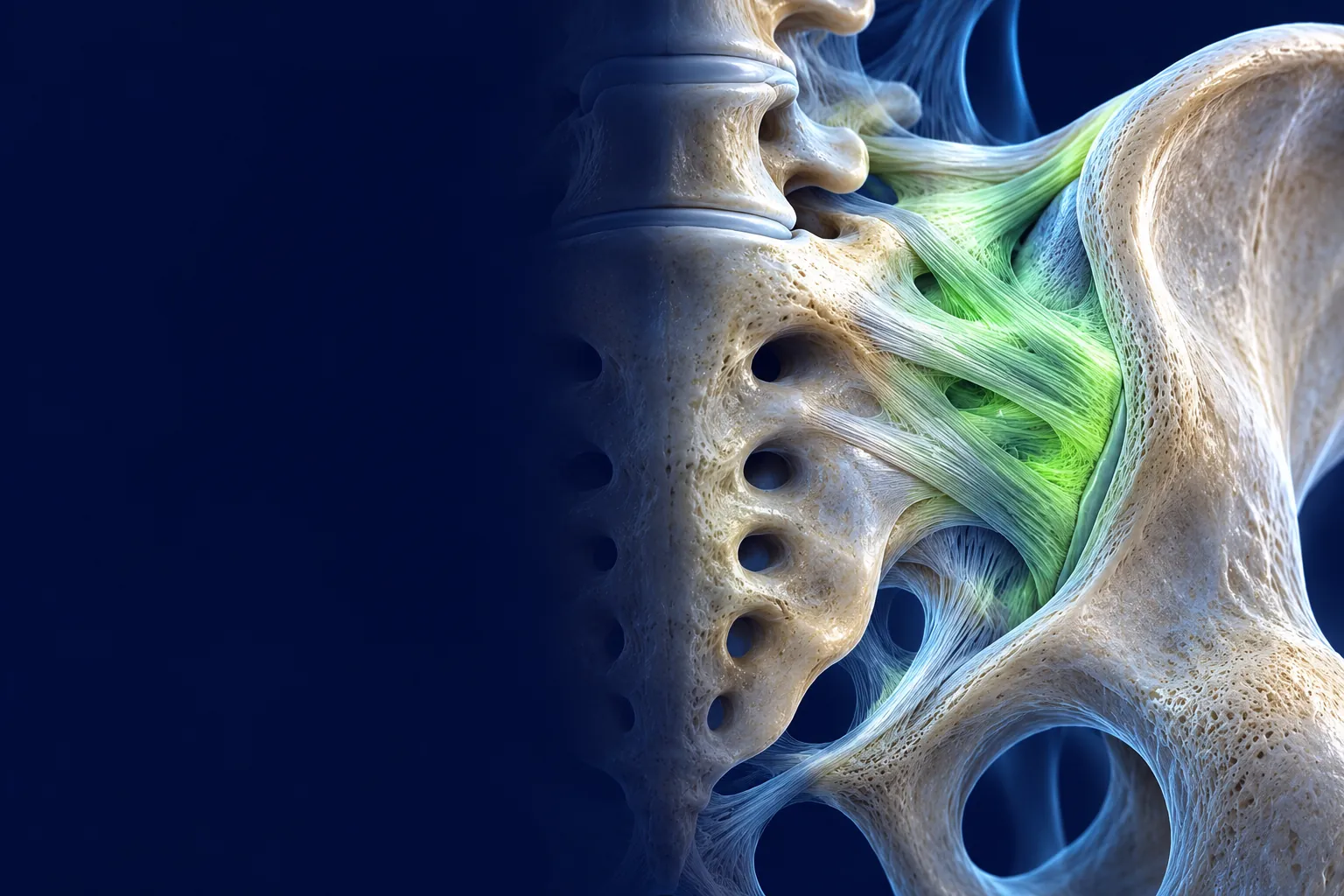
SACRIX SI joint stabilization uses an allograft (donor bone) implant to stabilize the sacroiliac joint, an alternative to traditional titanium SI joint fusion for patients with chronic SI joint pain and instability.
Conceptual illustration
Medically reviewed by Joshua L. Hare, DO, Founder & Medical Director
Updated September 2026
Conditions Treated
Chronic SI joint pain, SI joint instability, sacroiliitis with degeneration — candidates who prefer a biologic approach
Talk with our team
Request a callback
The team calls you back within one business day, Monday to Thursday.
Insurance we acceptThe treatment explained
How It Works
Through a minimally invasive approach, the SACRIX allograft implant is placed across the SI joint under fluoroscopic guidance. The biological nature of the allograft promotes natural bone incorporation and joint stabilization. Posterior approaches such as this one were developed in part because they reduce the neurovascular complications associated with the lateral approach[1] used in traditional lateral fusion.
Treatment day
What to Expect
30-45 minute procedure, performed through a posterior approach to the SI joint.
Afterward
Recovery
Modified activity for 2-4 weeks.
Duration of Relief
In a 2025 systematic review of minimally invasive posterior SI joint fusion, average pain-score improvement at final follow-up ranged 35% to 75% for the posterior intra-articular approach,[1] with complications described as minimal[1] — and the authors note that randomized controlled trials are still needed.
References
Five clinics
Book a visit
Our fellowship-trained physicians are accepting new patients at five clinics: Dalton, Ringgold, Cleveland, Farragut and Oak Ridge.