

Failed Back Surgery Syndrome Treatment
Persistent pain after spine surgery, evaluated and treated at five clinics across North Georgia & East Tennessee.
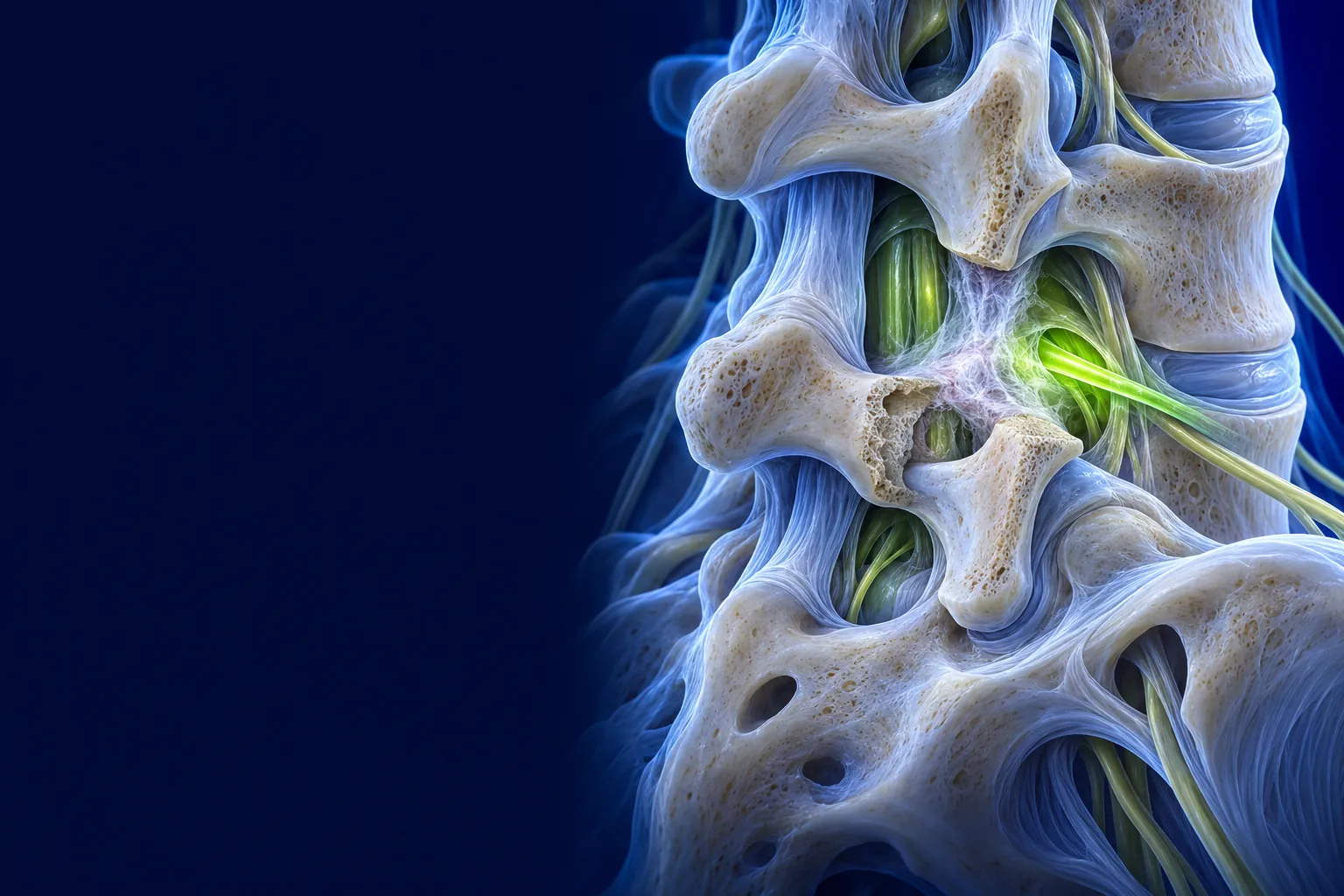
Conceptual illustration
Medically reviewed by Joshua L. Hare, DO, Founder & Medical Director
When pain continues after spine surgery
Failed back surgery syndrome, also called post-laminectomy syndrome, describes back or leg pain that persists or returns after spine surgery.[1] The surgery itself may have been technically successful: pain can continue because of scar tissue around a nerve root, arthritis in the joints beside a fusion, a level the operation did not address, or the sacroiliac joint below it. At IPC, evaluation starts with your operative history and imaging, then uses diagnostic image-guided injections to work out which structure is generating the pain now. Treatment options include targeted injections and, for nerve pain that has not responded to other measures, spinal cord stimulation or an intrathecal pain pump.
Talk with our team
Request a callback
The team calls you back within one business day, Monday to Thursday.
Insurance we acceptSymptoms of failed back surgery syndrome
The name is misleading: it does not mean the operation was done badly. It means the pain has another explanation that still needs finding.
- Back pain that never fully settled after the recovery period, or that improved and then returned months later
- Leg pain, numbness or tingling — either the same symptoms as before surgery, or a new pattern in a different part of the leg
- Pain with a different character than before the operation, often more burning or electric
- Reduced tolerance for standing, walking or sitting through a workday
- Sleep repeatedly interrupted by back or leg pain
Whether the pain never improved, or improved and then came back, is genuinely useful history — the two patterns point toward different causes. It is worth writing down the timeline before an appointment.
When to see a pain specialist about failed back surgery syndrome
If pain has persisted for months after spine surgery, a pain specialist's job is to work out which structure is generating it now. The candidates — scar tissue, arthritis in the neighboring joints, a level that was not part of the operation, the SI joint — look similar from the outside and are treated differently, which is why diagnostic image-guided injections are often the first step: they identify the source before anything longer-term is considered.
Being assessed does not commit you to another procedure.
New fever, wound drainage, or rapidly worsening weakness soon after spine surgery needs same-day contact with your surgical team. New loss of bladder or bowel control, numbness in the saddle area, or weakness in both legs needs same-day emergency assessment.
Treatment options for failed back surgery syndrome
The right option depends on what the diagnostic work-up identifies. Several of the options below begin with a trial phase, so you and your physician can judge the benefit before committing to anything permanent.
Spinal Cord Stimulation
Spinal cord stimulation (SCS) uses mild electrical impulses delivered through small leads placed in the epidural...
High-Frequency Spinal Cord Stimulation (HF10)
High-frequency spinal cord stimulation, commonly called HF10, delivers electrical impulses at 10,000 Hz —...
Intrathecal Drug Delivery (Pain Pump)
An intrathecal drug delivery system (pain pump) delivers medication directly into the intrathecal space surrounding...
References
Clinical sources for this page.
Five clinics
Failed back surgery syndrome care in North Georgia and East Tennessee
Pain management specialists accepting new patients at five clinics.