

Facet Joint Procedures
Lumbar Radiofrequency Ablation
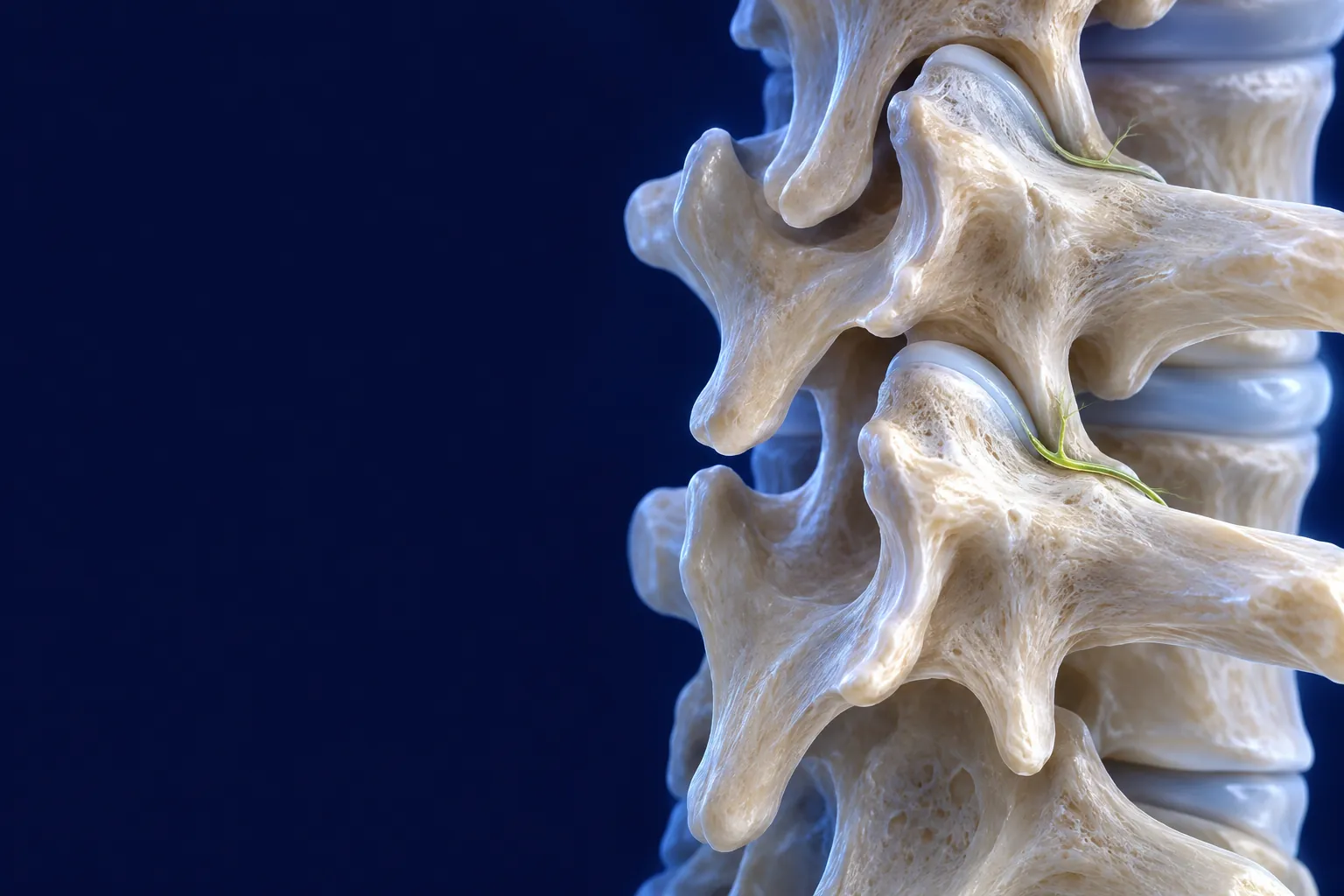
Lumbar radiofrequency ablation (RFA) interrupts the medial branch nerves that carry pain from arthritic facet joints in the low back, once diagnostic blocks have confirmed those joints are the source.
Conceptual illustration
Medically reviewed by Joshua L. Hare, DO, Founder & Medical Director
Updated September 2026
Conditions Treated
Lumbar facet arthropathy, axial low back pain, lumbar spondylosis and degenerative disc disease with facet involvement, each confirmed first by diagnostic medial branch blocks.
| Treatment target | Small nerve branches carrying pain from the low-back facet joints.[1] |
|---|---|
| Before RFA | Medial branch blocks help estimate whether treating those nerves will relieve your pain.[2] |
| The visit | A 30-60 minute outpatient procedure, depending on the levels and sides treated. A driver is required. |
| After treatment | Soreness may last one to two weeks.[3] |
Talk with our team
Request a callback
The team calls you back within one business day, Monday to Thursday.
Insurance we acceptWhich part of your back is hurting?
Facet joints connect neighboring vertebrae and allow your back to bend and twist.[3] Facet pain is often felt beside the spine and into the back of the thigh; pain below the knee is less typical.[1] Several structures can contribute to the same person's back pain.
Symptoms, examination and imaging alone cannot reliably identify a painful facet joint.[2] The assessment separates facet pain from problems involving a disc or nerve root. A diagnosis of degenerative disc disease on an MRI does not, by itself, select the nerves for RFA.
The 2026 ASIPP facet-joint guidelines place diagnostic blocks after assessment and a course of conservative care,[4] such as medication, structured exercise or physical therapy. This is a clinical recommendation, not a statement of your insurer's requirements.
What the test block tells us
A medial branch block uses local anesthetic around the proposed target nerves.[1] The response helps predict RFA benefit, but false-positive and false-negative results are possible.[2] Relief is interpreted with your examination and pain history.
A diary completed while the anesthetic is working records more useful detail than recalling the visit later.[2] Note what improved, when pain returned and which activities you tried. Medication use, extra rest and sedation can affect interpretation of the result.[2]
Ask how your response will be assessed and whether another block is needed. Guidelines differ on the number of blocks and the amount of relief used to select patients.[2]
How the lumbar nerves are treated
Each lumbar facet joint receives nerve supply from adjacent levels,[1] so treating a joint can involve more than one nerve. For the lowest lumbar joint, the target includes the L5 dorsal ramus.
With the skin numbed, the physician positions a thin cannula using live X-ray guidance and passes an electrode through it.[3] Sensory or motor testing checks the position before treatment.[4] Controlled heat then interrupts pain transmission along the selected nerves.
Preparation and reasons to tell the team in advance
A driver is required for this outpatient visit. Ask for your medication, eating and drinking instructions when the procedure is arranged. Sedation requirements vary with the patient and procedure;[4] do not assume you will be fully asleep.
Tell the team about infection, anesthetic or contrast allergies, blood thinners, new weakness, spinal hardware or an implanted electronic device.[1] Pregnancy and bleeding problems also need review.[3] Medication changes require instructions from your treating clinicians.
Afterward
Recovery and side effects
Pain or burning at the treatment site can last a week or two.[3] Relief may build over several weeks.[3] Usual activity can often resume after a day or two of rest;[3] follow your discharge instructions for work, exercise and driving.
Possible complications include bleeding or a hematoma, infection, an allergic reaction, temporary numbness or weakness, burning nerve irritation and skin burns.[1] Pain can also worsen or change after treatment. Your consent discussion should cover the risks that apply to your treatment.
Cleveland Clinic's RFA recovery guidance advises contacting your clinician for severe pain, redness or swelling at the needle site, or increased limb weakness or numbness.[3]
How long can relief last, and when is RFA repeated?
The 2026 StatPearls review describes relief commonly lasting 6 to 24 months.[1] At follow-up, describe both the pain change and what you can do more comfortably. The 2026 ASIPP guideline gives lumbar RFA a moderate recommendation based on Level II evidence.[4]
Repeat lumbar RFA is considered when pain returns after a useful period of relief.[2] It is not an automatic once- or twice-yearly appointment. A changed pain pattern may justify reassessment or another test block[2] before repeating the procedure.
References
Clinical sources for this page.
- Leavitt L, Dixon B, Francio VT, Rohrs J, Hendrix JM. Radiofrequency Ablation. StatPearls [Internet]. StatPearls Publishing; updated July 6, 2026. Back to first citation ↑
- Cohen SP, Bhaskar A, Bhatia A, et al. Consensus practice guidelines on interventions for lumbar facet joint pain from a multispecialty, international working group. Regional Anesthesia and Pain Medicine. 2020;45(6):424–467. Back to first citation ↑
- Cleveland Clinic. Radiofrequency Ablation for Pain Management. Medically reviewed; last updated March 14, 2022. Back to first citation ↑
- Manchikanti L, Sanapati MR, Albers SL, et al. Updated 2026 Comprehensive Evidence-Based Guidelines for Facet Joint Interventions in the Management of Chronic Spinal Pain: American Society of Interventional Pain Physicians (ASIPP) Guidelines. Pain Physician. 2026;29(4S):S1–S228. PDF p. 3 PDF p. 4 PDF p. 5 PubMed Back to first citation ↑
Five clinics
Book a visit
Our fellowship-trained physicians are accepting new patients at five clinics: Dalton, Ringgold, Cleveland, Farragut and Oak Ridge.