

Minimally Invasive Spine Procedures
Percutaneous Disc Decompression
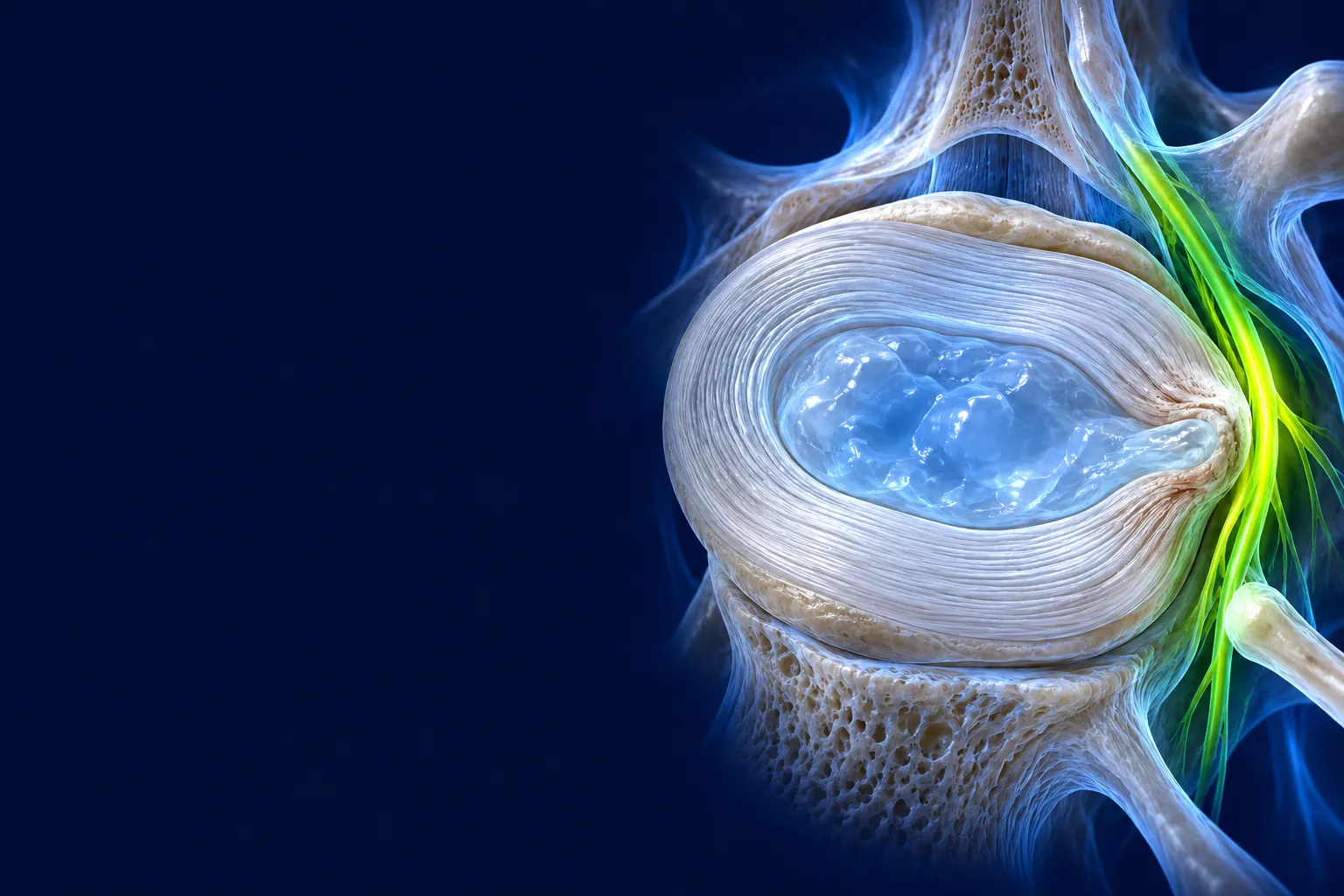
Percutaneous disc decompression is a minimally invasive procedure that removes a small amount of disc material from a bulging or herniated disc to reduce intradiscal pressure and relieve compression on adjacent nerve roots.
Conceptual illustration
Medically reviewed by Joshua L. Hare, DO, Founder & Medical Director
Updated September 2026
Conditions Treated
Contained disc herniations (disc bulge without rupture), chronic discogenic pain, radiculopathy from disc protrusion
Talk with our team
Request a callback
The team calls you back within one business day, Monday to Thursday.
Insurance we acceptThe treatment explained
How It Works
Under fluoroscopic guidance, a small probe or specialized device is inserted into the disc through a needle-sized incision. A small amount of nucleus pulposus (disc material) is removed, reducing pressure within the disc and alleviating nerve root compression.
Treatment day
What to Expect
30-45 minute outpatient procedure. Performed under local anesthesia with sedation. There is no open surgical incision.
Afterward
Recovery
Return home same day. Resume light activities within 1-3 days. Avoid heavy lifting for 2-4 weeks.
Duration of Relief
Some patients require additional treatment if the disc continues to degenerate. A systematic review of nucleoplasty — one widely used form of percutaneous disc decompression — graded the evidence as limited to fair for managing radicular pain due to contained disc herniation,[1] the same contained-herniation picture this procedure is offered for. We go over that evidence grade with you.
Five clinics
Book a visit
Our fellowship-trained physicians are accepting new patients at five clinics: Dalton, Ringgold, Cleveland, Farragut and Oak Ridge.