

Minimally Invasive Spine Procedures
Radiofrequency Ablation
Radiofrequency ablation (RFA) — also called radiofrequency denervation, neurotomy or lesioning — uses controlled thermal energy generated by radio waves to disrupt specific nerves that transmit pain signals, providing prolonged pain relief for patients with confirmed nerve-mediated pain.
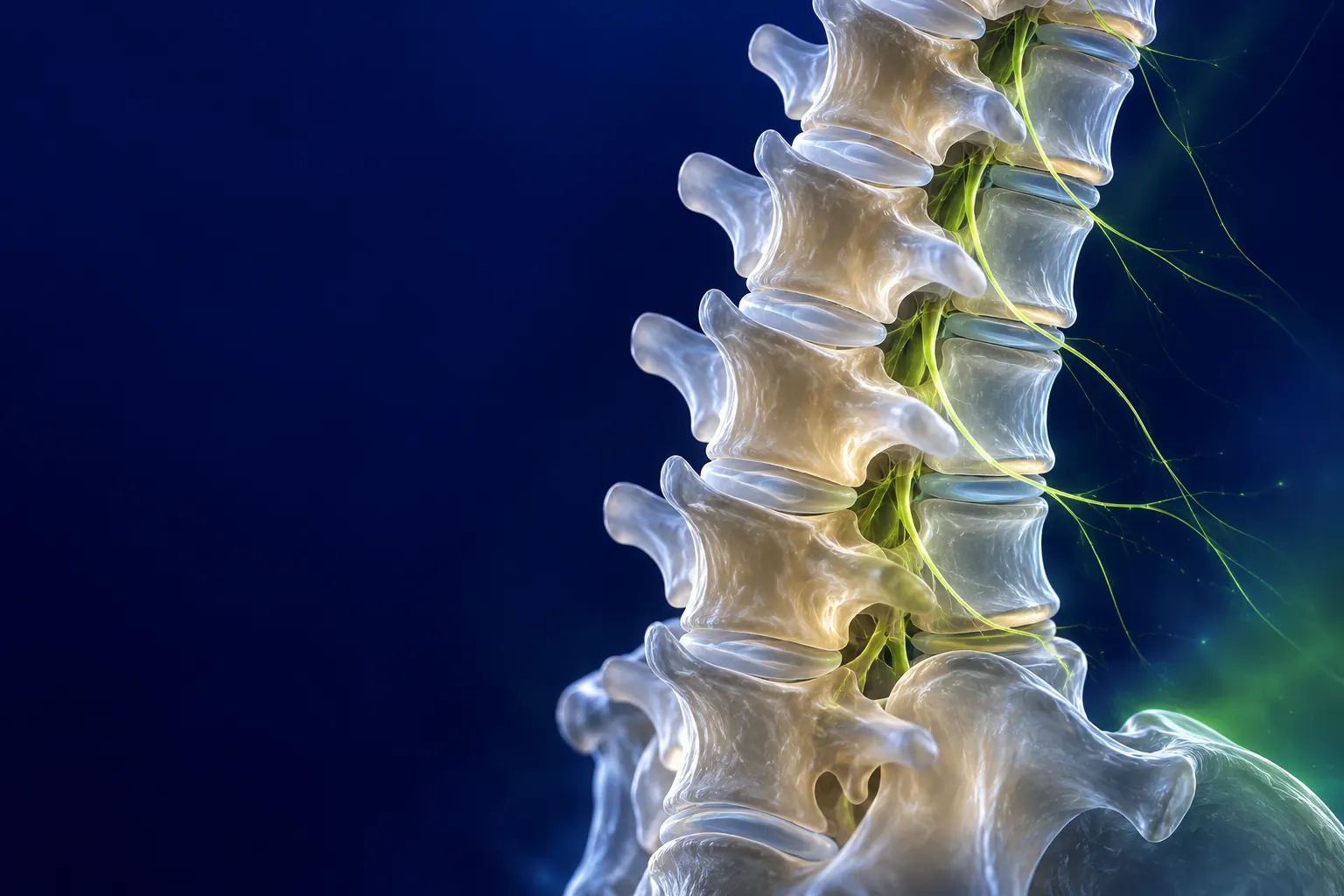
Conceptual spine illustration
Medically reviewed by Joshua L. Hare, DO, Founder & Medical Director
Updated August 2026
Conditions Treated
Facet joint arthritis (cervical, thoracic, lumbar), sacroiliac joint pain, genicular nerve (knee) pain — confirmed by diagnostic blocks
The key facts
Radiofrequency Ablation at a Glance
| Type of procedure | Outpatient, image-guided (fluoroscopy) |
|---|---|
| Anesthesia | Local anesthetic at the skin over each treatment level |
| Time in the procedure room | About 30–60 minutes, depending on how many levels are treated |
| Back to normal activity | Within days |
| Relief typically develops | Over 2–4 weeks, often after a temporarily sore stretch |
| Relief typically lasts | 6 to 24 months[1] |
| Repeatable | Yes — treated nerves regenerate over time, and repeat ablation can be considered when pain returns |
Talk with our team
Request a callback
The team calls you back within one business day, Monday to Thursday.
Insurance we acceptWhich Level Is Treated
Facet joint ablation is described by the part of the spine it treats, because the target nerves, the diagnostic blocks and the pattern of pain differ at each level: cervical radiofrequency ablation, thoracic radiofrequency ablation, and lumbar radiofrequency ablation. Ablation of the sacroiliac joint and of the knee are covered separately, on SI joint radiofrequency ablation and genicular nerve radiofrequency ablation.
The treatment explained
How It Works
After diagnostic blocks[2] confirm the pain source, radiofrequency probes are placed adjacent to the targeted nerves under fluoroscopic guidance. Controlled heat creates lesions that interrupt pain signal transmission. Cooled RF technology creates larger lesions for broader coverage.
For spine pain, the usual targets are the medial branch nerves[1] — the small sensory branches that carry pain signals from the facet joints. They are not the main nerve roots that run to your arms or legs, which is why the treatment can quiet joint pain without numbing the limb.
Candidates
Who It Helps — and Who It Does Not
RFA is for pain that a diagnostic block has already confirmed. In the 2020 multispecialty consensus guidelines, medial branch blocks were judged more predictive than injections into the joint itself[2] for identifying who will benefit, and the same guidelines note that stricter patient selection is likely to improve results. If your test block did not relieve the pain, ablating those nerves is unlikely to either. That is settled before the procedure is scheduled.
It is also not the tool for every kind of back or neck pain. Pain coming mainly from a compressed nerve root — the sciatica pattern that shoots down a leg — points toward different options, such as an epidural steroid injection; your provider will map the pain generator before recommending either. Blood thinners and implanted devices such as pacemakers are reviewed before scheduling.[1]
Treatment day
The Day of the Procedure
- Check-in and positioning. You lie face down on the procedure table; the skin over the treatment area is cleaned and your vital signs are monitored.
- Numbing. Local anesthetic is placed at the skin over each level being treated.
- Guided placement. Thin radiofrequency cannulas are advanced to the target nerves under fluoroscopy, and their position is confirmed on the image before anything else happens.
- Treatment. Controlled heat creates a small lesion at each confirmed nerve. The procedure takes about 30–60 minutes depending on how many levels are planned.
- Recovery room. A short observation, aftercare instructions, and home the same day.
Clinical evidence
What the Evidence Shows
The most comprehensive guidance on this procedure is the 2020 consensus of a multispecialty, international working group, which concluded that lumbar medial branch RFA “may provide benefit to well-selected individuals”.[2] Selection is the reason IPC's pathway runs through diagnostic blocks first. Current clinical reference literature reports relief typically lasting 6 to 24 months,[1] with repeat ablation considered when nerve regeneration lets the pain return. The test block is what makes the result predictable: it confirms which nerves carry your pain before the ablation treats them, so the people who go forward are the ones set up to do well.
Afterward
Recovery, Week by Week
| First 48 hours | Soreness at the treated sites is common. Take it easy; use ice and your usual medications as advised at discharge. |
|---|---|
| Weeks 1–2 | Temporary increased soreness is normal as the treated nerves respond — expect to feel more sore before you feel better. |
| Weeks 2–4 | Relief typically develops across this window. Most patients are back to normal activities well before it peaks. |
| The months after | Relief typically lasts 6 to 24 months.[1] When pain returns, repeat ablation can be considered. |
Safety
Risks and Side Effects
Serious complications are uncommon. On the day, your care team monitors for neurologic, allergic, infectious and thermal issues;[1] the expected side effect is the temporary soreness described above. The clinical literature also recommends watching for weakness of the small stabilizing muscles (the multifidus) in the months after lumbar treatment, with a physical therapy referral where it is identified.
The Test Block and the Ablation: Which Is Which
| Medial branch block | A short-acting local-anesthetic test injection. Its job is diagnostic: it tells your provider whether these nerves carry your pain, and it wears off within hours. A block that relieved your pain and then wore off did not fail. It found the target, and it means you are a candidate for RFA. |
|---|---|
| Radiofrequency ablation | Controlled heat treatment of the same nerves. Its job is therapeutic: relief that typically lasts months rather than hours, repeatable as the nerves regenerate. |
The two are easy to confuse, and the distinction matters when you weigh how each one felt. See medial branch block for the diagnostic half in detail.
Your questions
Common Questions
- Why do I need a test block before the ablation?
- Because the block is the evidence. The consensus guidelines rate diagnostic medial branch blocks as the better predictor of who will benefit from RFA — a block that relieves your pain confirms the target; one that does not tells us to treat a different structure instead.
- Are the nerves destroyed permanently?
- No. The treated branches regenerate over time, which is why relief typically lasts months rather than forever — and why the procedure can be repeated when the pain returns.
- What if it does not help me?
- Selecting patients through diagnostic test blocks is precisely how we make that unlikely — the block confirms the target before the ablation treats it. If relief falls short, your provider re-evaluates where the pain is actually coming from — a disc, a nerve root or the SI joint each point to different treatments IPC performs.
- Is radiofrequency ablation covered by insurance?
- It is an established, widely covered interventional procedure, and coverage details vary by plan. Check yours on our insurance page or ask when you book — insurance is verified before your first visit.
References
Clinical sources for this page.
- Radiofrequency Ablation. StatPearls [Internet], National Library of Medicine. Back to first citation ↑
- Cohen SP, Bhaskar A, Bhatia A, et al. Consensus practice guidelines on interventions for lumbar facet joint pain from a multispecialty, international working group. Regional Anesthesia and Pain Medicine. 2020;45(6):424–467. Back to first citation ↑
Five clinics
Book a visit
Our fellowship-trained physicians are accepting new patients at five clinics: Dalton, Ringgold, Cleveland, Farragut and Oak Ridge.