

Epidural Injections
Caudal Epidural Injection
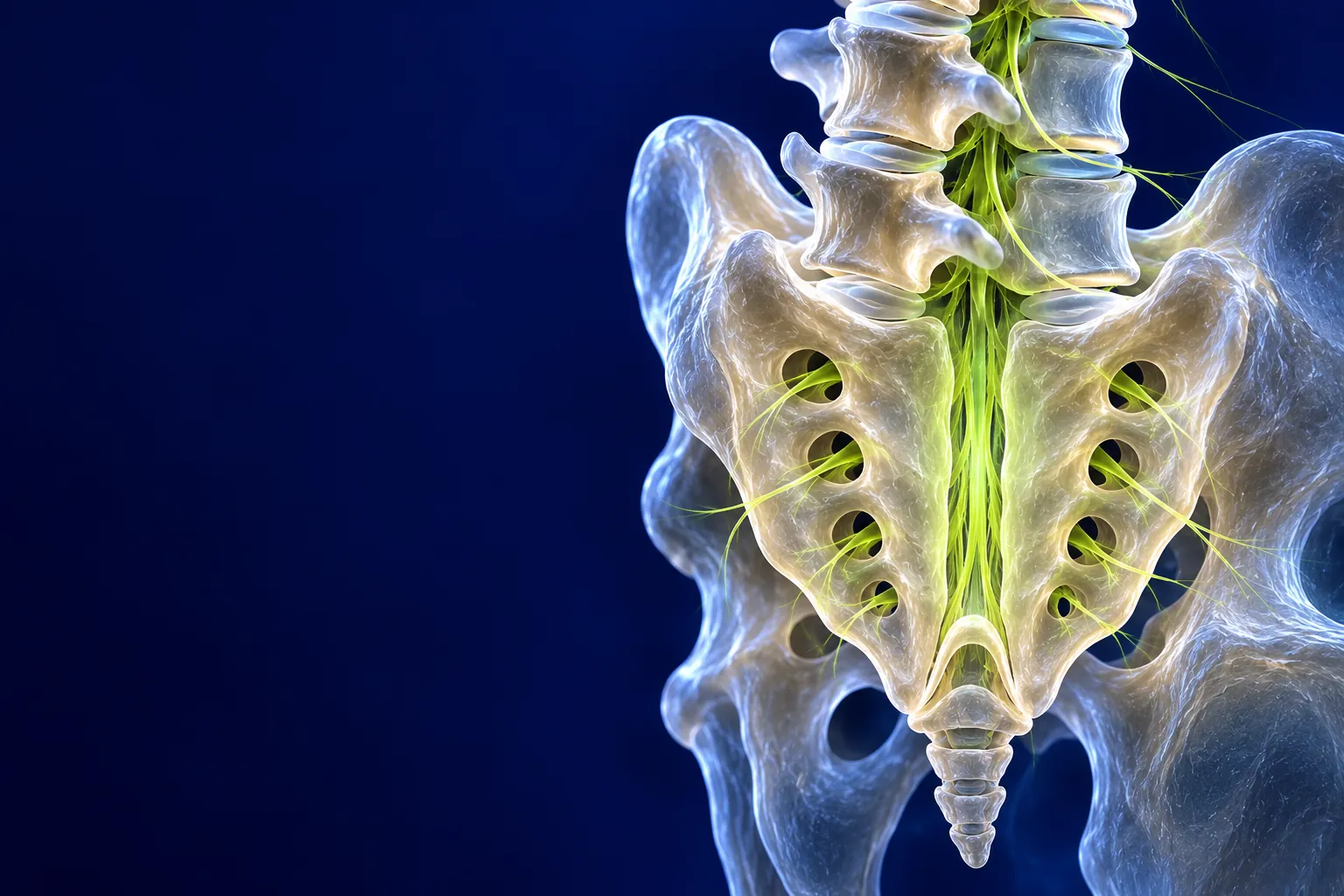
A caudal epidural injection delivers steroid medication into the epidural space through the sacral hiatus (an opening at the base of the tailbone), allowing medication to spread upward and reduce inflammation around lower lumbar and sacral nerve roots.
Conceptual illustration
Medically reviewed by Joshua L. Hare, DO, Founder & Medical Director
Updated August 2026
Conditions Treated
Low back pain, sciatica, lumbar spinal stenosis, post-laminectomy syndrome (especially with epidural scarring)
The key facts
Caudal Epidural Injection at a Glance
| Type of procedure | Outpatient, image-guided (fluoroscopy) |
|---|---|
| Anesthesia | Local anesthetic at the skin over the sacral hiatus |
| Time in the procedure room | About 15–20 minutes |
| Going home | Same day, after a short observation; if you receive relaxing medicine, someone drives you home[1] |
| Relief typically develops | Over 2–7 days as the steroid takes effect |
| Relief typically lasts | Weeks to months,[1] rarely up to a year |
| Repeatable | Yes — repeat injections are weighed per patient as part of a broader plan |
Talk with our team
Request a callback
The team calls you back within one business day, Monday to Thursday.
Insurance we acceptThree Routes Into the Epidural Space
Steroid reaches the epidural space along three primary routes:[2] interlaminar, between the bony arches of the spine; transforaminal, through the opening where a nerve root exits; and caudal, through the sacral hiatus at the base of the tailbone. IPC performs all three — see lumbar epidural steroid injection and lumbar transforaminal epidural injection for the other two. The caudal route enters lowest, and it is the one this page describes.
The treatment explained
How It Works
The physician inserts a needle through the sacral hiatus at the base of the tailbone, advancing it into the caudal epidural space.[1] This approach is particularly useful for patients with previous lumbar surgery where scar tissue may make other epidural approaches more difficult.
What goes in is a mixture: a corticosteroid to calm inflammation, plus a numbing medicine. Per MedlinePlus, the medication decreases swelling and pressure[1] on the irritated nerves, and the numbing half can help identify which nerve was generating the pain. The route has a built-in safety feature, too: keeping the needle entry below the S2–S3 level decreases the risk of dural puncture,[2] the complication behind the classic post-injection positional headache.
Candidates
Who It Helps — and Who It Does Not
The strongest case for an epidural steroid injection is radicular pain — pain that follows a nerve out of the spine, the way sciatica runs down a leg. A review of 70 studies of lumbar epidural steroid injections graded the evidence good for lumbar disc herniations, fair for spinal stenosis, and poor for failed back surgery syndrome.[2] After previous back surgery the caudal route is often still the practical way in; ask your physician how the weaker failed-back-surgery evidence applies to your case.
Pain that stays centered in the low back without traveling — the pattern that points at the facet joints rather than a nerve root — usually calls for a different work-up, starting with diagnostic medial branch blocks. And no epidural steroid injection cures the cause[1] of back pain; it opens a window of relief that physical therapy and the rest of your plan work inside.
Treatment day
The Day of the Procedure
- Check-in and positioning. You lie face down while the skin over the base of the spine is prepped, with monitoring on for the whole visit.
- Finding the entry point. The sacral hiatus is located on a fluoroscopic X-ray view, and the skin and underlying tissue are numbed with local anesthetic.
- Needle placement. An epidural needle is directed through the sacral hiatus, and a side-view image confirms its depth.
- Confirming the space. A small amount of contrast dye is injected and watched on the images — its spread pattern verifies the needle sits in the epidural space before any medication is given.
- The injection. The steroid mixture goes in, the needle comes out, and after a short observation you head home.
Clinical evidence
What the Evidence Shows
Per MedlinePlus's patient summary, epidural steroid injections provide short-term relief in at least one half of the people who receive it,[1] with symptoms staying better for weeks to months and rarely up to a year. The clinical reference literature adds that in some cases benefit has lasted up to 12 months[2] and delayed the need for surgery. Surgery itself is the uncommon path — about 14% of patients with lumbosacral radiculopathy eventually require it[2] — and the injection's job is to make the months of recovery livable for everyone else. How long it holds differs from person to person, and that is useful information for planning the next step.
Afterward
Recovery, the First Week
| The first hours | Temporary leg numbness or heaviness from the numbing medicine can occur; it wears off the same day. |
|---|---|
| Days 1–2 | Mild soreness at the injection site is common and settles on its own. |
| Days 2–7 | Pain relief typically begins in this window as the steroid takes effect. |
| If relief fades | Tell your provider how long it held. That answer shapes the next step: a repeat injection, a different route, or a fresh look at the diagnosis. |
Safety
Risks and Side Effects
Complications are rare. The clinical reference literature lists bleeding, infection, allergic reaction, nerve injury and dural puncture[2] among the possibilities, alongside transient effects such as tingling in a leg or a warm, flushed feeling from the steroid for a day or two. MedlinePlus notes that when side effects like dizziness, headache or nausea occur, most of the time these are mild.[1] Blood thinners matter here — tell the team what you take when the injection is scheduled, and the full risk list is walked through with you at the same time.
Your questions
Common Questions
- Why go in through the tailbone?
- The sacral hiatus is a natural bony opening, and entering there keeps the needle below the S2–S3 level — where the chance of puncturing the fluid-filled sac around the spinal nerves is lower. It also stays usable when scarring from previous surgery complicates the higher approaches.
- Does the injection hurt?
- The skin and tissue over the entry point are numbed first. MedlinePlus's answer matches what most patients report: you may feel pressure during the injection, and most of the time the procedure is not painful.
- How is this different from the epidural given during childbirth?
- Same space, different purpose. An obstetric epidural runs continuous anesthetic through a catheter to block sensation; this is a single image-guided injection of anti-inflammatory medication meant to treat the source of ongoing pain, not to numb you for an event.
- What if it does not help?
- If a caudal injection does not move your pain, the work-up looks at other pain generators — the facet joints or the SI joint — each of which has its own diagnostic test at IPC.
Five clinics
Book a visit
Our fellowship-trained physicians are accepting new patients at five clinics: Dalton, Ringgold, Cleveland, Farragut and Oak Ridge.