

Neuromodulation
High-Frequency Spinal Cord Stimulation (HF10)
High-frequency spinal cord stimulation, commonly called HF10, delivers electrical impulses at 10,000 Hz — significantly higher than traditional SCS — providing pain relief without the tingling or buzzing sensation (paresthesia) that conventional stimulation produces.
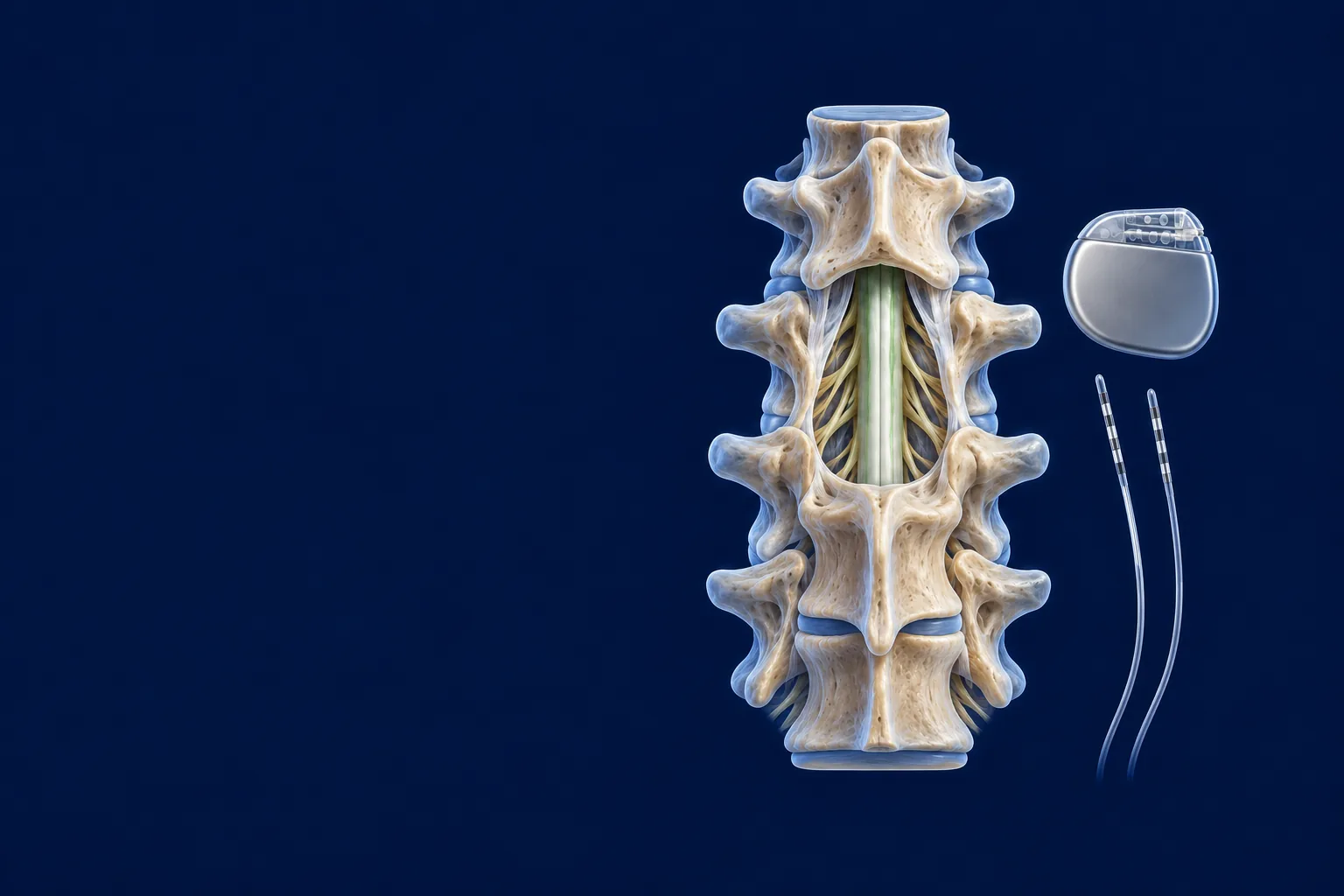
Conceptual illustration
Medically reviewed by Joshua L. Hare, DO, Founder & Medical Director
Updated September 2026
Conditions Treated
Chronic back and leg pain, failed back surgery syndrome, conditions where paresthesia-free stimulation is preferred
| Stimulation | 10,000 pulses per second, without stimulation-induced tingling.[1] |
|---|---|
| Trial first | Test pain relief and daily function before permanent implantation.[2] |
| Implanted equipment | Leads, a rechargeable pulse generator and a handheld remote.[3] |
| Long-term care | Ongoing device use and maintenance are part of treatment.[2] |
Talk with our team
Request a callback
The team calls you back within one business day, Monday to Thursday.
Insurance we acceptWhat makes HF10 different?
See our spinal cord stimulation guide for an overview of the shared trial and implant process. In the SENZA trial, HF10 leads were positioned using spinal anatomy; conventional stimulation used patient feedback to map tingling over the painful area.[1] Both used leads in the epidural space, but their placement and programming differed.
The remote lets you switch stimulation on or off and adjust therapy settings.[3] Ask to see the equipment when discussing an implant.
What does the trial involve?
During a trial, leads in your body connect to an external stimulator for several days; your doctor sets the duration.[4] A successful trial precedes the decision about an implanted generator.
The 2023 multisociety guidance recommends assessing pain relief, function, medication use and satisfaction together.[2] A reduction in pain of at least 50% is its usual success threshold, with individualized exceptions.[2] This is published guidance, not a statement of IPC's insurance requirements.
Choose a specific activity to evaluate during the trial,[2] such as standing long enough to prepare a meal. Ask which activities are safe while the trial leads are in place and how to record changes in your pain.
What is checked before an implant?
Surgical suitability, effective trial relief and the ability to operate the system are requirements in the FDA's Senza overview.[3] Bring questions about using the remote or managing the charger.
The multisociety guidance recommends psychosocial screening, including depression, before a trial.[2] It advises against SCS with active psychosis or ongoing substance use disorder; mild, remote or treated substance use disorder requires individual assessment.[2] Patients need to understand the procedure, its risks and long-term maintenance.[2]
What did the SENZA study find?
The randomized trial enrolled people with substantial chronic back and leg pain. Among implanted participants assessed at 24 months, 76.5% of 85 HF10 participants had at least 50% back-pain reduction, compared with 49.3% of 71 conventional-SCS participants.[1] The corresponding leg-pain response rates were 72.9% and 49.3%.[1]
Nevro funded the study, and participants and investigators knew which treatment was used.[1] These are results from the study's implanted follow-up group, not IPC's own patient outcomes.
Safety
Recovery and implant-related risks
The Senza patient manual describes wound care and early restrictions on bending, lifting and sudden movements.[4] Get your own return-to-work, driving and bathing instructions.
Risks include infection, bleeding, implant-site pain and lead movement; some problems require further surgery or device removal.[4] Contact your doctor promptly about implant-site redness, swelling, tenderness or unusual symptoms.[4] Review the complete device safety information with your physician.
Living with the device
Charging time depends on battery status and stimulation settings.[4] Ask how the charging routine would fit your day and who to contact about programming.
MRI requires device-specific safety checks; tell the imaging team about your implant and show your patient ID card.[4] Ask for the current instructions for the exact system proposed for you.
References
Clinical sources for this page.
- Kapural L, Yu C, Doust MW, et al. Comparison of 10-kHz High-Frequency and Traditional Low-Frequency Spinal Cord Stimulation for the Treatment of Chronic Back and Leg Pain: 24-Month Results From a Multicenter, Randomized, Controlled Pivotal Trial. Neurosurgery. 2016;79(5):667–677. PubMed Back to first citation ↑
- Shanthanna H, Eldabe S, Provenzano DA, et al. Evidence-based consensus guidelines on patient selection and trial stimulation for spinal cord stimulation therapy for chronic non-cancer pain. Regional Anesthesia and Pain Medicine. 2023;48(6):273–287. PubMed Back to first citation ↑
- U.S. Food and Drug Administration. Senza Spinal Cord Stimulation (SCS) System — P130022/S042. Approved January 18, 2022. Back to first citation ↑
- Nevro Corp. Patient Manual (Senza system). 11052 Rev K; © 2021. FDA-hosted patient labeling. PDF p. 15 PDF p. 20 PDF p. 22 PDF p. 72 PDF p. 73 Back to first citation ↑
Five clinics
Book a visit
Our fellowship-trained physicians are accepting new patients at five clinics: Dalton, Ringgold, Cleveland, Farragut and Oak Ridge.