

Nerve Blocks
Ganglion Impar Block
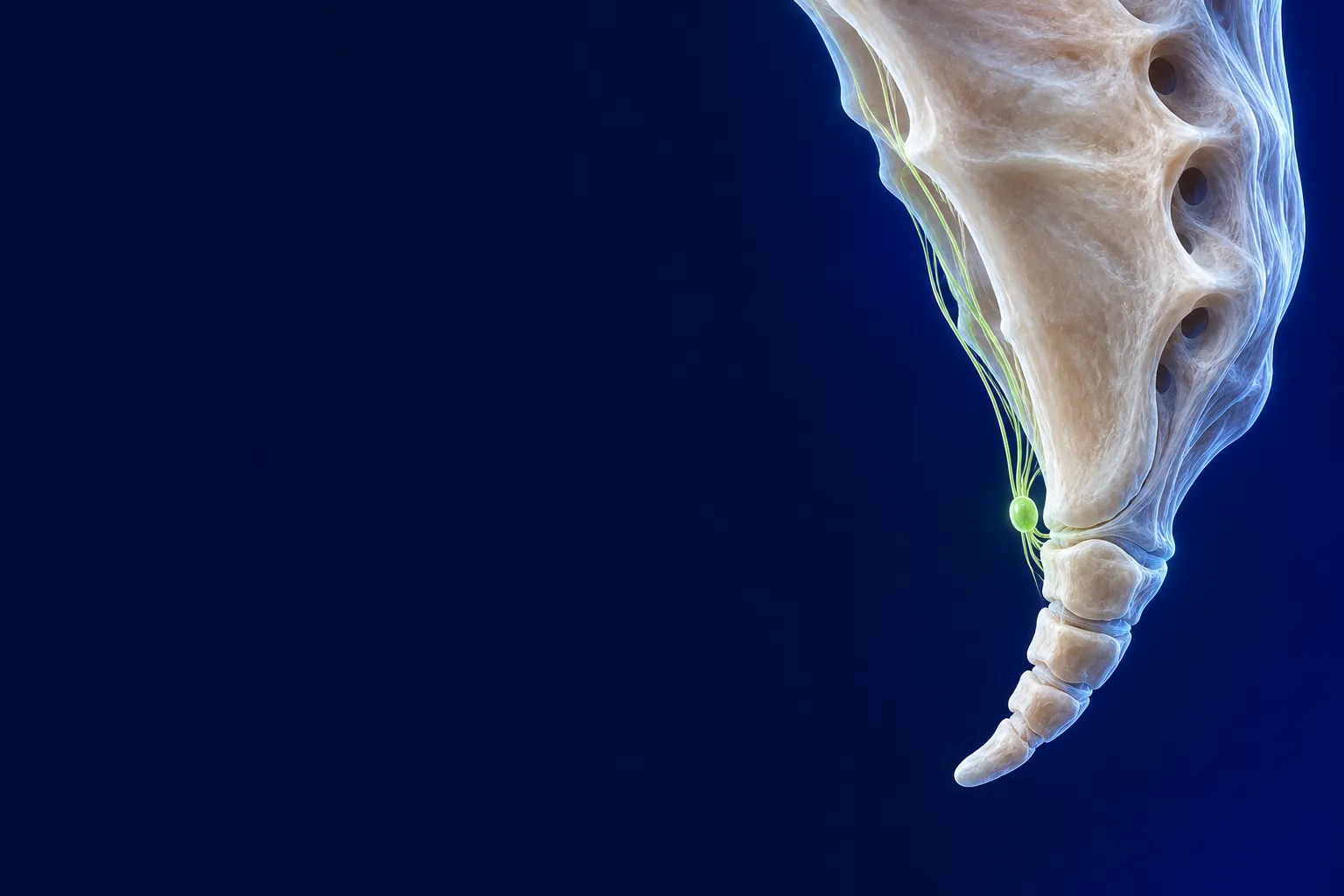
A ganglion impar block is an injection of local anesthetic near the ganglion impar — a small nerve structure at the base of the spine, where the sacrum meets the tailbone. It is used to evaluate and manage persistent tailbone, rectal and perineal pain.
Conceptual illustration
Medically reviewed by Joshua L. Hare, DO, Founder & Medical Director
Updated August 2026
Conditions Treated
Coccydynia (tailbone pain), perineal pain, rectal and genital pain, and pelvic pain related to cancer.
The key facts
Ganglion Impar Block at a Glance
| Type of procedure | Outpatient, fluoroscopy-guided, lying face down |
|---|---|
| What is targeted | A single nerve bundle sitting anterior to the sacrococcygeal junction[1] — just in front of the tailbone |
| Anesthesia | The skin is numbed; you stay awake unless sedation has been arranged |
| Time in the room | Usually under 30 minutes |
| Confirming position | Contrast is injected first, forming a characteristic “coma sign”[1] before any medication goes in |
| Back to activity | Home the same day; local soreness for a day or two is common |
| First block | Usually diagnostic and short-acting — what it shows decides what comes next |
Talk with our team
Request a callback
The team calls you back within one business day, Monday to Thursday.
Insurance we acceptThe Last Ganglion on the Chain
Running down either side of the spine is a chain of nerve bundles that handle the body's automatic functions. At the very bottom, the two sides meet and join into a single unpaired bundle. That is the ganglion impar (the name means “unpaired”): the chain consists of 20 to 24 paired and interconnected ganglionic nodes that join together at the coccygeal level to form the terminal unpaired node.[1]
It is the most caudal ganglion of the sympathetic chain and provides partial sympathetic innervation to the genitals and pelvic viscera.[1] Because one small structure carries sensation from a region that is otherwise awkward to treat, a single well-placed injection can reach pain in the tailbone, the perineum, the rectum and the genitals — areas that are hard to reach any other way, and that patients frequently find hard to raise at all.
What It Is Used For
The recognized indications are sympathetically mediated sacral, rectal, anal, genital, vulvar, and perineal pain,[1] along with coccydynia,[1] pain secondary to endometriosis[1] and proctalgia fugax.[1] The reference also names it for malignant vulvar, rectal, and anal pain, intractable sacral and perineal pain (eg, postherpetic neuralgia), or coccydynia.[1]
Two groups come to this block most often. One is people with tailbone pain that has persisted long after a fall or a childbirth injury, where sitting is the problem and cushions have stopped helping. The other is people with cancer-related pain low in the pelvis, where blocking the sympathetic pathway can reduce pain and, with it, the dose of medication needed — disrupting these pathways may provide profound analgesia for diseases of internal organs, cancer in particular, and reduce the use of opioid medications.[1]
Reaching the Ganglion
- Positioning. You lie face down and the lower back is cleaned and draped.
- Finding the level. Fluoroscopy identifies the junction between the first and second coccygeal bones.[1]
- Numbing. Local anesthetic is placed in the skin and the tissue along the needle path.
- Reaching the target. A short guide needle is advanced to the bone surface, and a finer needle is passed through it until the tip sits just anterior to the coccyx.[1]
- Confirm, then treat. After drawing back on the syringe, contrast is injected to prove the position, and only then is 2 to 4 mL of anesthetic[1] delivered.
Why the Technique Has Changed
This is one of the few procedures where it is worth knowing that the modern method is not the original one. The technique first described in 1990 approached the ganglion with a bent needle passed just anterior to the tip of the coccyx at the midline,[1] and it required a finger placed in the rectum to steer the needle. It worked, but it carried real drawbacks: a 20% to 30% failure rate, risk of rectal perforation, intestinal flora translocation, and needlestick injury to the intrarectal finger.[1]
Newer routes replaced it. The transcoccygeal approach — passing between the small bones of the tailbone rather than around them — is most popular due to its efficacy and simplicity,[1] and the needle-through-needle refinement used today provides advantages such as decreased needle breakage and avoidance of trauma to the disc and coccyx.[1] If you have read an older description of this procedure and found it alarming, that is very likely what you were reading.
What Relief Tells You
A first block is usually done with local anesthetic and wears off quickly. The question it answers is whether this nerve bundle is carrying your pain at all — and a clear response, even a brief one, is what justifies going further. Where the block helps but the relief fades, options include repeating it, adding a steroid, or moving to a longer-acting neurolytic treatment for cancer-related pain, where the aim shifts from testing to sustained control.
Pain low in the pelvis can also arise from the pelvic floor muscles, the pudendal nerve, the sacroiliac joint or the coccyx itself, and each of those has its own treatment here. Starting with a short diagnostic block is how we aim the treatment at the right structure from the outset instead of working through options one at a time.
Safety
Risks and Side Effects
The specific risk here follows from the anatomy: the rectum sits directly in front of the target. Proximity to the rectum can lead to visceral trauma and infection if the intestine is perforated,[1] which is the reason for imaging, contrast confirmation and the modern needle route rather than the original one. Other problems — sacral nerve root injury, bladder, rectal and erectile dysfunction, and periosteal injection[1] — are described as possible, though very rare.[1]
Expect soreness at the injection site for a day or two. The only absolute barriers are known allergy to medications planned to be used and refusal or inability to cooperate and consent.[1] Tell us about any blood thinner well ahead of the appointment. An infection or a tumor anywhere along the needle path is weighed carefully, because of the risk of dissemination[1] — so bring your full medication list and any recent imaging.
Your questions
Common Questions
- Does anything go into the rectum?
- Not with the approach used today. The original 1990 technique used a finger in the rectum to guide the needle, and it was replaced partly for that reason. Current practice passes the needle through the tailbone under fluoroscopy instead.
- Will I be able to sit afterwards?
- Usually yes, though the area may be tender for a day or two, and many people are more comfortable with a cushion at first. If sitting was your main problem, note carefully how it feels over the following hours — that is the most useful thing you can report back.
- Is it done under general anesthetic?
- No. The skin and needle path are numbed and you stay awake unless sedation has been arranged in advance. Being awake lets you say straight away if a sensation feels wrong.
- I have had tailbone pain for years. Is it too late?
- Long-standing coccydynia is one of the named indications, and duration alone does not rule the block out. What matters more is whether the pain fits this nerve's territory, and a short diagnostic block is how that gets settled.
References
Clinical sources for this page.
Five clinics
Book a visit
Accepting new patients at five clinics: Dalton, Ringgold, Cleveland, Farragut and Oak Ridge.