

Nerve Blocks
Peripheral Nerve Block
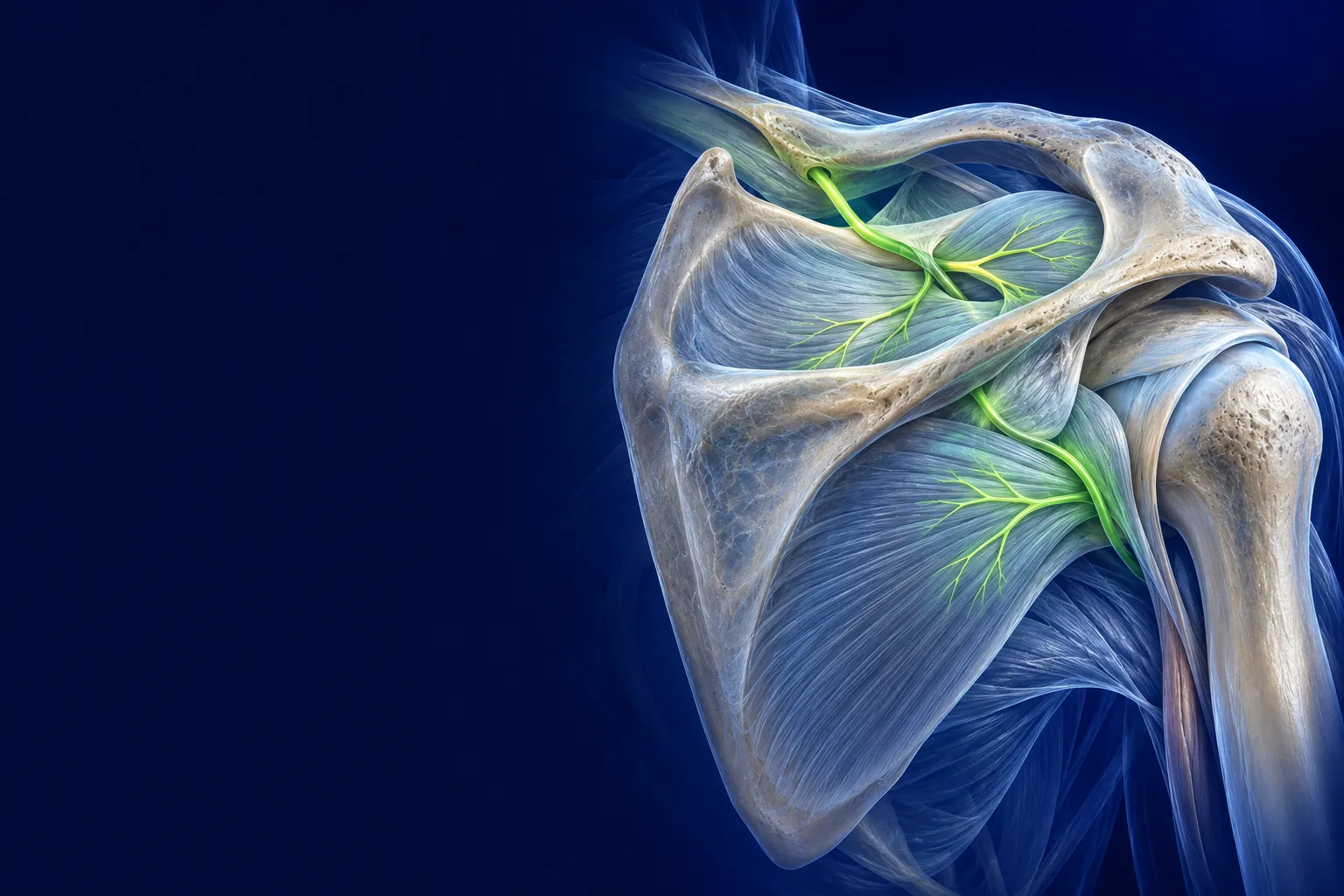
Peripheral nerve blocks involve injecting local anesthetic and sometimes corticosteroid near specific peripheral nerves to diagnose and treat pain arising from those nerves. Common targets include the suprascapular nerve (shoulder), lateral femoral cutaneous nerve (thigh), and various upper and lower extremity nerves.
Conceptual illustration
Medically reviewed by Joshua L. Hare, DO, Founder & Medical Director
Updated August 2026
Conditions Treated
Shoulder pain (suprascapular nerve block), meralgia paresthetica (lateral femoral cutaneous nerve), intercostal neuralgia, post-surgical nerve pain, peripheral nerve entrapment
Talk with our team
Request a callback
The team calls you back within one business day, Monday to Thursday.
Insurance we acceptThe treatment explained
How It Works
Using ultrasound or nerve stimulator guidance, the physician identifies the target peripheral nerve[1] and injects anesthetic and steroid around it. This blocks pain signal transmission and reduces nerve inflammation.
Treatment day
What to Expect
10-20 minute procedure. Temporary numbness in the distribution of the targeted nerve is expected and confirms successful block.
Afterward
Recovery
Resume normal activities immediately. Temporary numbness resolves within hours.
Duration of Relief
Weeks to months depending on the condition and whether steroid is included.
References
Clinical sources for this page.
Five clinics
Book a visit
Our fellowship-trained physicians are accepting new patients at five clinics: Dalton, Ringgold, Cleveland, Farragut and Oak Ridge.