

Nerve Blocks
Intercostal Nerve Block
An intercostal nerve block involves injecting local anesthetic and corticosteroid near an intercostal nerve — the nerve that runs along the bottom edge of each rib — to treat pain in the chest wall, rib area, or upper abdomen.
Conceptual illustration
Medically reviewed by Joshua L. Hare, DO, Founder & Medical Director
Updated August 2026
Conditions Treated
Post-herpetic neuralgia (shingles), rib fracture pain, post-thoracotomy pain, intercostal neuralgia, chest wall pain
The key facts
Intercostal Nerve Block at a Glance
| Type of procedure | Outpatient, image-guided (ultrasound or fluoroscopy) |
|---|---|
| Anesthesia | Local anesthetic at the skin; you stay awake, and there is a safety reason for that (below) |
| Time in the procedure room | About 10–15 minutes |
| Back to activity | Same day; no strenuous activity for 24 hours |
| Relief begins | Right away from the numbing medicine; any steroid effect builds over the following days |
| Coverage | The band of chest wall served by the single nerve treated — one rib level per injection |
| If it helps but fades | Repeat blocks or radiofrequency ablation are the usual next step |
Talk with our team
Request a callback
The team calls you back within one business day, Monday to Thursday.
Insurance we acceptThe Nerve Under Each Rib
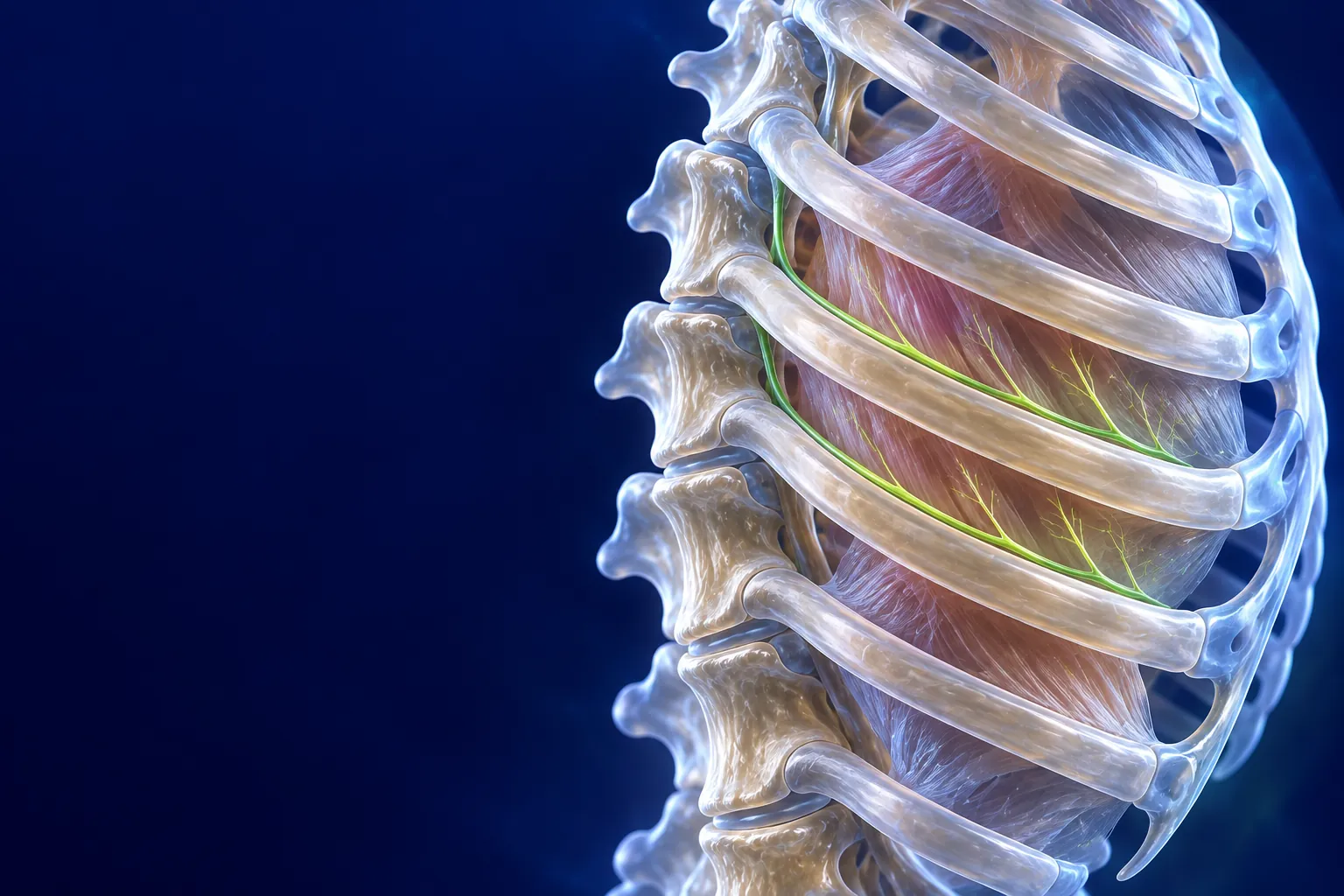
Every rib carries a nerve along its underside. Each intercostal nerve travels in a neurovascular bundle with an intercostal artery and vein, with the nerve running inferior to both[1] — tucked lowest in the groove under the rib. That nerve supplies sensation to a horizontal band of the chest wall, which is why pain from a rib injury, shingles, or chest surgery so often traces a stripe around one side of the chest. Placing anesthetic and steroid beside a single nerve treats exactly that band.
The same anatomy calls for care. The bundle is so well supplied with blood vessels that local anesthetic uptake into the blood is high[1] here, so the dose is kept deliberately dilute and capped.
What It Treats
The clinical reference literature lists the established indications: incisional pain from thoracic surgery, herpes zoster or postherpetic neuralgia, rib fractures, breast surgery, upper abdominal surgery, and differentiating between visceral and somatic pain.[1] In this clinic, that translates to three common patients: someone whose fractured rib makes every breath hurt, someone with persistent burning along a rib band after shingles, and someone with chest wall pain that has never been clearly explained — where the block doubles as a diagnostic test, because relief confirms which nerve carries the problem.
Treatment day
The Day of the Procedure
- Positioning. You are positioned so the physician can reach the angle of the rib, with monitoring on throughout.
- Marking the level. The rib carrying your pain is identified, and the entry point is marked at the inferior border of the rib at the rib angle.[1]
- Imaging. Ultrasound guidance may decrease the risk of intravascular injection and pneumothorax,[1] letting the physician watch the needle in real time.
- The injection. After the skin is numbed, the needle is walked off the lower edge of the rib to the nerve, and the medication is delivered.
- Observation. A short recovery-room check, then home the same day.
Why You Stay Awake
Sedation is deliberately light or absent for this block. Performing it on an awake patient means you can report unusual sensations immediately — the clinical reference notes that staying awake can alert the clinician to pneumothorax or intraneural injection symptoms[1] that might go unnoticed in a sedated patient. If anything feels unusual during the injection, say so right away.
Clinical evidence
What the Evidence Shows
The largest pooled analysis, covering 5,184 patients, found that single-injection intercostal nerve blocks reduced pain scores for up to 24 hours and were noninferior to thoracic epidural analgesia[1] for pain with movement in the 7-to-24-hour window. Compared with epidural techniques the block is technically simpler,[1] though its opioid-sparing effect is smaller and the measured benefit decreases after 48 hours.[1]
The strongest trial data describe short-term relief in surgical settings. For ongoing chest wall pain in the clinic, the block is used for three things: to confirm which nerve is generating the pain, to give a stretch of relief in which healing and physical therapy can make progress, and to serve as the usual trial before a longer-lasting option such as radiofrequency ablation. When a steroid is included, relief often outlasts the anesthetic by weeks, and how long the relief lasts in your case helps your physician plan the next step.
Safety
Risks and Side Effects
Two risks get specific attention. The first is pneumothorax — air around the lung — because the lung sits just deep to the nerve; imaging guidance and technique are built around avoiding it, and new shortness of breath after the procedure warrants a call the same day. The second is the blood-vessel-rich anatomy noted above: local anesthetic systemic toxicity is fortunately uncommon,[1] and dilute concentrations with a capped total dose decrease the risk[1] further.
Beyond those, expect the ordinary: soreness at the injection site for a day or two. The reference lists only two absolute reasons not to proceed — patient refusal and active infection at the injection site[1] — with blood thinners and prior nerve injury weighed case by case, so bring your full medication list to the consultation.
Your questions
Common Questions
- Why does my pain follow a band around my chest?
- Because each intercostal nerve serves a horizontal strip of chest wall at its rib level. Pain that traces that strip — from a fracture, shingles, or surgery — points at the nerve for that level.
- My shingles rash healed months ago. Can this still help?
- Lingering nerve pain after shingles — postherpetic neuralgia — is among the established indications for this block. The block is a core part of the plan for post-shingles pain, and how you respond to it guides what we combine it with.
- How is this different from an epidural?
- An epidural bathes nerves near the spine and covers a wide region; an intercostal block treats one named nerve and its band of chest wall. For a single painful rib level, the narrower block is usually the better fit.
- The block helped, then wore off. What now?
- That is the expected course for a diagnostic block. It tells your physician the target is right, and the longer-lasting options follow: a repeat block, or radiofrequency ablation of the same nerve for relief measured in months.
References
Clinical sources for this page.
Five clinics
Book a visit
Our fellowship-trained physicians are accepting new patients at five clinics: Dalton, Ringgold, Cleveland, Farragut and Oak Ridge.